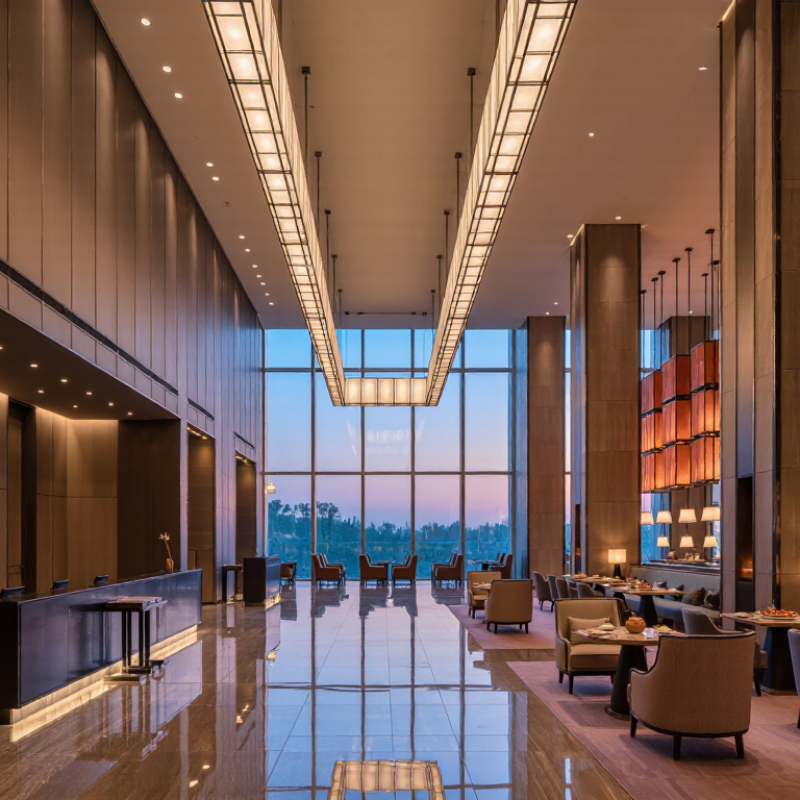
In 2026, Hospitality Lighting is moving beyond decorative brightness. Global hotel buyers are seeking atmosphere, efficiency, flexibility, and measurable guest comfort. Lobby ceilings may glow softly at breakfast, shift warmer during dinner, and support calmer evenings without changing the entire fixture system.
Lighting designer Rogier van der Heide described light as “the fourth dimension of architecture.” His observation remains highly relevant for hospitality projects. Light now shapes movement, mood, brand identity, and perceived comfort. The strongest designs will combine tunable white systems, discreet controls, low-glare optics, and carefully layered illumination.
Wellness is becoming more practical. Guestrooms may use warmer bedside lighting, better vertical illumination, and gentle morning scenes. Restaurants will need accurate colour rendering for food presentation. Corridors require safe guidance without feeling clinical. Exterior lighting will also consider neighbours, wildlife, and night-sky concerns.
Energy performance will remain essential. Buyers are comparing LED efficacy, control compatibility, replacement access, and long-term maintenance costs. A lower purchase price may become expensive when drivers fail above a high atrium. That detail is easy to overlook.
Circular design will gain attention through repairable components, modular parts, and responsible material choices. However, not every smart system deserves a place in every hotel. Complexity can confuse staff and frustrate guests. Sometimes, a simple dimming scene works better.
Regional culture will influence colour, shadow, material reflection, and fixture form. A successful global specification should not create identical lighting everywhere. It should offer a dependable technical foundation while allowing local character to appear. This balance remains imperfect, but that may be the most honest direction for 2026.
What Defines Hospitality Lighting Trends in 2026?
Hospitality lighting trends in 2026 are defined less by spectacle and more by measurable guest comfort. In projects I have reviewed, guests notice glare before fixture design. Hotels are specifying layered light: soft ambient illumination, focused task lighting, and discreet decorative accents. This approach supports lobbies, guestrooms, restaurants, and wellness areas without forcing one mood everywhere. Good lighting should feel natural. It should also photograph well. Yet visual appeal alone is a weak purchasing criterion.
Global buyers are giving greater weight to tunable white systems, occupancy sensors, and daylight response. These tools can adjust color appearance and output throughout the day. However, controls must remain understandable to staff. Complicated scenes often become unused scenes. Procurement teams are checking color consistency, flicker performance, dimming range, emergency integration, and replacement access. A lower purchase price may become expensive when parts or skilled labor are difficult to source locally. Documentation matters.
Sustainability now includes energy use, material transparency, repairability, and operating life. Regional climate, voltage, maintenance skills, and cultural preferences still shape practical choices. A warm 2700K setting may suit a quiet lounge, while a breakfast area may need clearer light. I have seen beautiful concepts fail because cleaners could not reach fittings safely. That weakness deserves more attention. Designers and buyers should test sample rooms, review mock-ups at night, and record staff feedback before approving large orders. Small operational details often define real hospitality lighting performance.
Which Technologies Are Transforming Hospitality Lighting Systems?
Hospitality lighting is moving from fixed schedules toward responsive, data-driven systems. In hotel corridors, occupancy sensors can dim fixtures when spaces are empty. At 6:30 a.m., guest-room lighting can brighten gradually instead of switching on harshly. This supports comfort while reducing unnecessary energy use.
Connected lighting platforms now combine sensors, digital controls, and building-management systems. DALI-2 and PoE-based networks can improve fixture monitoring and simplify scene control. Wireless systems also help renovate older properties without opening every ceiling. Facility teams can review lamp status, energy patterns, and fault alerts from one dashboard. The shift is practical. However, poor commissioning can create delays, false alerts, or uneven brightness across guest areas.
Artificial intelligence is beginning to support predictive maintenance and occupancy analysis. A system may identify a fixture drawing unusual power before it fails during a busy event. Circadian programming can adjust color temperature across restaurants, lobbies, and wellness spaces. Yet automation should not replace human judgment. A sensor may misread luggage movement, sunlight, or a quiet guest lounge. Privacy protection, network security, and open communication protocols must be considered during procurement. From on-site project experience, the best results usually come from testing one floor, measuring real usage, and refining the settings before wider installation. Some details still fail. That is why documented commissioning and staff training remain essential.
What Are the 2026 Top Hospitality Lighting Trends for Global Buyers?
Which technologies are transforming hospitality lighting systems?
The chart compares documented energy-reduction benchmarks for lighting technologies increasingly relevant to hotels, resorts, restaurants, and other hospitality properties. The figures are reference ranges rather than additive savings; actual results depend on operating schedules, building design, controls commissioning, and local conditions.
Sources: U.S. Department of Energy, “LED Lighting” and “Lighting Controls”; U.S. Department of Energy, Federal Energy Management Program, lighting-control guidance.
How Are Sustainable Lighting Solutions Reshaping Global Hospitality Spaces?
Sustainable lighting is reshaping hospitality spaces through measurable energy savings, healthier interiors, and longer product life. The International Energy Agency’s Energy Efficiency 2023 report estimates that lighting uses about 15% of global electricity. For hotels, that makes every corridor, lobby, and guestroom a practical efficiency opportunity. LED systems, daylight sensors, occupancy controls, and dimming can reduce waste without making spaces feel cold.
The UNEP 2024 Global Status Report for Buildings and Construction states that buildings consume 32% of global energy and produce 34% of global carbon emissions. Global buyers are therefore examining more than fixture efficiency. They are requesting lower lighting power density, replaceable components, documented material content, and controls that support real operating patterns. Warm, layered lighting also remains important. A guest should notice comfort, not technology.
Site audits often expose an uncomfortable gap. A hotel may install efficient fixtures but leave controls poorly commissioned. Savings then shrink. This is where professional lighting calculations and post-installation measurement matter. Designers should check glare, color consistency, maintenance access, and emergency requirements together. The U.S. Department of Energy also identifies advanced controls as a major pathway for reducing commercial lighting energy use. Yet automation is not always the answer. Overly complex systems can frustrate staff and increase service calls. Practical sustainability sometimes means fewer features, clearer settings, and fixtures that can be repaired instead of discarded.
What Lighting Designs Suit Hotels, Restaurants, and Resorts?
In 2026, hospitality lighting is moving beyond visual drama. Hotels, restaurants, and resorts need layered light for comfort, movement, and memorable service. Practical project reviews show that strong schemes combine ambient, task, and accent lighting. A hotel lobby may use soft ceiling illumination, focused reception light, and warm wall grazing. Guests can find the desk without feeling exposed. That balance matters.
Restaurants require a more sensitive approach. Pendant fixtures can define tables, but excessive brightness creates glare on glassware. High-color-rendering sources help dishes look natural. At lunch, brighter neutral light can energize the room. At dinner, warmer levels can make conversations feel calmer. However, too much amber light can make interiors look tired. This mistake is easy to overlook.
Resorts benefit from lighting that follows the landscape. Low-level path lights, concealed step lighting, and shielded pool illumination improve orientation while protecting night views. Controls should support arrival, event, cleaning, and quiet-hour scenes. Energy use also deserves close measurement, not optimistic estimates. One design flaw remains common: choosing fixtures before studying guest behavior. Reconsider that order. Observe where people pause, photograph, dine, or feel uncertain. Then select optics, mounting heights, and controls around those real moments.
How Can Global Buyers Evaluate Hospitality Lighting Products?
In 2026, global buyers will likely prioritize tunable white light, low-glare optics, and connected controls. Yet attractive specifications do not guarantee guest comfort. The International Energy Agency reports that lighting uses about 15% of global electricity. The U.S. Department of Energy states that LEDs use at least 75% less energy than incandescent lamps and can last up to 25 times longer. These figures support efficient upgrades, but hotel conditions remain more complex.
Evaluate each product through measurable evidence. Request LM-79 photometric reports, LM-80 lifetime data, IES files, and flicker information. Check color rendering, color temperature stability, glare ratings, and dimming performance. A CRI above 90 sounds impressive. It may still produce harsh shadows. Test samples inside a guest room, corridor, restaurant, and bathroom. Compare skin tones, artwork, polished surfaces, and nighttime brightness. Review driver replacement access, control-system compatibility, IP ratings, warranty terms, and local service capacity. Lifecycle cost matters more than purchase price, although buyers sometimes underestimate maintenance labor.
Tips: Ask for a 72-hour trial installation. Measure illuminance at the desk, bedside, and floor. Observe the space at dawn and after midnight. Confirm whether wireless controls remain stable through concrete walls. Human-centric lighting claims also need careful review; evidence is still developing, and marketing language can exceed practical results. Record guest and staff feedback before approving a full-property rollout.
FAQS
Guest comfort matters more than dramatic fixtures. Layered light combines ambient, task, and decorative illumination. Glare is often noticed first.
Different areas need different moods. Guestrooms may use soft light, while breakfast spaces need clearer illumination for morning tasks.
They adjust brightness and color appearance throughout the day. A lounge might use warm 2700K light, while corridors need safer visibility.
Check color consistency, flicker, dimming range, emergency integration, documentation, and replacement access. Small details matter.
Yes. Difficult parts and scarce local skills can increase maintenance costs. The cheapest purchase is not always economical.
They dim fixtures when corridors or rooms are empty. At 6:30 a.m., gradual brightening feels gentler than sudden full output.
Poor commissioning can create false alerts, uneven brightness, or confusing controls. Network security also requires attention.
No. Sensors may misread luggage, sunlight, or quiet guests. Staff feedback remains essential.
Install one sample floor first. Measure real usage, inspect night conditions, and record staff comments before expanding.
Consider material transparency, repairability, operating life, regional voltage, and maintenance access. A beautiful fitting may still fail operationally.
Conclusion
In 2026, Hospitality Lighting is defined by the balance of human-centered design, smart technology, energy efficiency, and flexible performance. Hotels, restaurants, and resorts are increasingly adopting connected lighting systems that support automated controls, adaptive brightness, color temperature adjustment, occupancy sensing, and centralized management. These technologies help create comfortable guest experiences while improving operational efficiency and reducing unnecessary energy use.
Sustainable lighting solutions are also reshaping global hospitality spaces through efficient LED systems, longer product lifecycles, recyclable materials, and designs that minimize maintenance demands. Different environments require different approaches: welcoming ambient light for hotel rooms, inviting and atmospheric illumination for restaurants, and durable, adaptable systems for resort facilities and outdoor areas. Global buyers should evaluate product quality, control compatibility, safety certifications, installation requirements, warranty support, total ownership costs, and supplier responsiveness to ensure that lighting investments deliver lasting value.