
A kitchen island works hard: it hosts meal prep, homework, quick breakfasts, and late-night conversations. The right Kitchen Island Lighting needs to support each task without turning the countertop into a stage or casting shadows across a cutting board. This guide explores seven ideas to buy in 2026, from paired pendants and linear chandeliers to adjustable fixtures and warm, dimmable LEDs. Small details matter. A shade’s width, the island’s length, ceiling height, and bulb color can change how a fixture feels in the room.
Energy use deserves a place in the decision, too. The U.S. Department of Energy reports that LED lighting uses at least 75% less energy and can last up to 25 times longer than incandescent lighting. That makes efficient bulbs a practical starting point, though dimmer compatibility and replacement costs still deserve a closer look. A beautiful fixture is not automatically comfortable. Bare bulbs can produce glare, and a dramatic cluster may crowd a narrow island. We’ll consider light quality, scale, installation, and everyday upkeep alongside appearance. Some choices will depend on the room, not a trend forecast. That’s worth remembering. The aim is not to copy a showroom, but to find lighting that makes your island useful, inviting, and easy to live with.
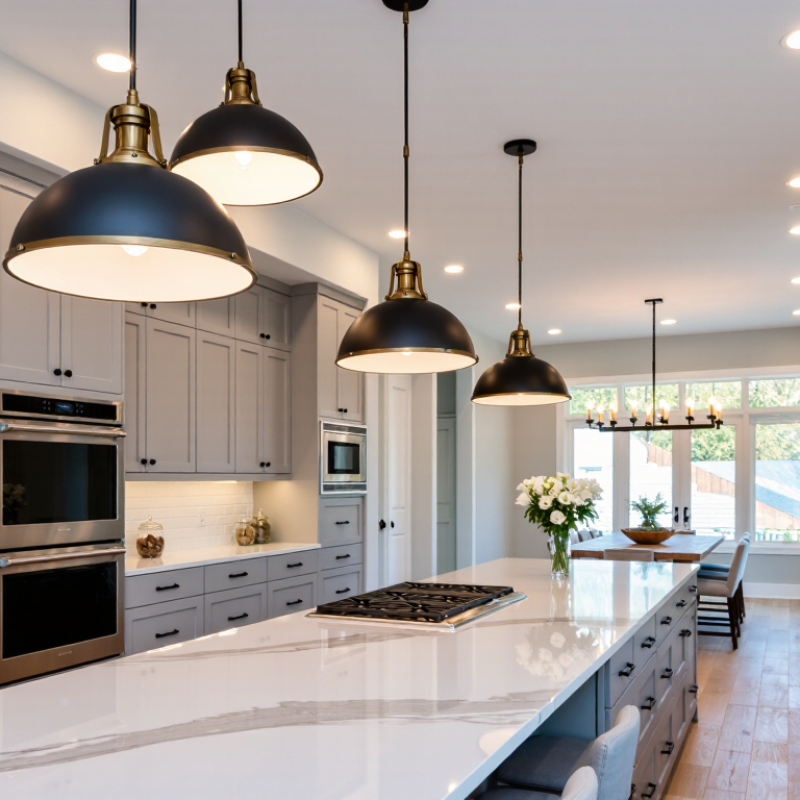
Assessing kitchen island lighting in 2026 starts with the island’s real tasks. Will it host chopping, homework, dining, or all three? The Illuminating Engineering Society recommends higher light levels for detailed kitchen work, with about 50 footcandles as a practical task-lighting target. Ambient lighting can remain softer. Measure the countertop, ceiling height, and sightlines before choosing fixtures. A bright pendant can still create shadows beneath cabinets.
Layering matters. Use pendants for focused light, recessed fixtures for general brightness, and dimmers for evening comfort. The 2024 National Kitchen & Bath Association Design Trends report continues to emphasize flexible, layered kitchen lighting. I would specify a color temperature near 2700–3000K for a warmer home atmosphere, with CRI 90 or higher for accurate food colors. Test samples at night. Finishes can look different then.
Energy use deserves attention too. The U.S. Department of Energy reports that LED lighting uses at least 75% less energy and lasts up to 25 times longer than incandescent lighting. Choose efficient LEDs, but do not judge by wattage alone. Check lumens, beam angle, glare control, dimmer compatibility, and replacement access. A common mistake is installing three beautiful pendants too close together. The counter becomes visually busy. I still think spacing should be adjusted on site, because drawings rarely show how people actually move around the island.
A practical comparison of fixture styles, lighting performance, sizing guidance, and installation considerations for kitchen islands.
| Lighting Idea | Best For | Recommended Light Output | Recommended Color Temperature | Color Rendering | Recommended Fixture Size and Spacing | Installation Height | Key Buying Considerations |
|---|---|---|---|---|---|---|---|
| 1. Linear Suspension Light | Long islands, open-plan kitchens, and evenly distributed task lighting | 2,000–4,000 lumens for a typical 6–8 ft island | 3000–3500 K | CRI 90 or higher | Choose a fixture about two-thirds to three-quarters of the island length; center it over the island | 30–36 in above the countertop | Look for adjustable suspension cables, diffused shades, dimming compatibility, and a wide light distribution |
| 2. Clustered Pendant Lights | Medium or large islands needing visual rhythm and focused task lighting | 600–1,000 lumens per pendant | 2700–3500 K | CRI 90 or higher | Use two pendants for islands up to about 6 ft; use three for longer islands; maintain 24–30 in between fixtures | 30–36 in above the countertop | Select matching shades with sufficient downward output and avoid overly narrow beams that create bright spots |
| 3. Single Oversized Pendant | Small islands, compact kitchens, and statement-focused interiors | 1,500–2,500 lumens | 2700–3000 K | CRI 90 or higher | Fixture diameter should generally be no more than about one-half to two-thirds of the island width | 30–36 in above the countertop | Use a broad diffuser or open lower design; confirm that the fixture does not obstruct sightlines across the kitchen |
| 4. Recessed Downlight Group | Minimalist kitchens, low ceilings, and islands beneath a clean ceiling plane | 800–1,200 lumens per 4–6 in downlight | 3000–3500 K | CRI 90 or higher | Arrange two or more fixtures in a row; position them over work zones rather than directly above seating | Ceiling-mounted; use approximately 24–36 in from the island edges as a starting layout guide | Choose adjustable or regressed trim, a wide beam for general task coverage, and glare-control optics |
| 5. Track Lighting | Flexible layouts, remodeled kitchens, and islands with changing task areas | 1,500–3,000 total lumens | 3000–3500 K | CRI 90 or higher | Use multiple adjustable heads aimed at the countertop; avoid aiming directly toward seated users | Ceiling-mounted; typically centered above the island | Prioritize independently adjustable heads, low-glare lenses, dimming, and sufficient clearance from cabinet doors |
| 6. Semi-Flush Mount Fixture | Lower ceilings, smaller kitchens, and areas where hanging fixtures may be impractical | 1,500–2,500 lumens | 3000–3500 K | CRI 80 minimum; CRI 90 preferred | Use a broad, shallow fixture centered over the island; select a size proportionate to the island dimensions | Ceiling-mounted with minimal drop | Check the fixture depth, diffuser coverage, ceiling-box compatibility, and whether light reaches the countertop evenly |
| 7. Decorative Glass Pendant Row | Traditional, transitional, or contemporary kitchens where appearance is equally important | 500–900 lumens per pendant | 2700–3000 K | CRI 90 or higher | Use two or three pendants; keep at least 6–12 in from each island end and about 24–30 in between pendants | 30–36 in above the countertop | Use frosted or lightly diffused glass to reduce glare; confirm the visible lamp is comfortable from seated positions |
Identify the island’s tasks first. It may support chopping, homework, dining, or conversation. Measure its length, width, ceiling height, and nearby sightlines.
Detailed food preparation needs stronger light than general room lighting. A practical target is about 30–50 footcandles. Exact needs vary.
Combine focused pendants with recessed or general lighting. Add dimmers for softer evenings. One layer rarely handles every activity well.
Keep pendants about 30–36 inches above the countertop. This range supports visibility without blocking conversation. Check the view from seated positions, too.
Leave roughly 6–12 inches from the island edge to each fixture’s centerline. Three smaller pendants may suit a long island. Adjust positions on site.
It can, but bright spots and dark work areas may appear. Several smaller fixtures often distribute light more evenly. Bigger is not always better.
Use diffused shades and avoid placing fixtures directly in someone’s eyes. Check shadows beneath cabinets. Paper templates can reveal awkward positions before drilling.
Choose about 2700–3000K for a warmer home atmosphere. A CRI of 90 or higher helps food colors look more accurate. Test samples at night.
Efficient LEDs generally use less energy and last longer than older incandescent lighting. Check lumens, beam angle, glare control, and dimmer compatibility. Wattage alone misleads.
Three attractive pendants may feel cramped when installed too closely. Ceiling joists, cabinets, and real walking paths can change the plan. Drawings miss things.
Choosing the right Kitchen Island Lighting in 2026 begins with understanding how the island is used, the room’s natural light, ceiling height, and the atmosphere you want to create. This guide explores seven practical styles, including pendants, linear fixtures, recessed lights, track systems, chandeliers, flush mounts, and layered combinations. Each option offers different benefits for task lighting, visual balance, and overall kitchen design.
Fixture size and placement are essential for comfortable illumination. The article explains how to select proportions that suit the island, maintain clear sightlines, and distribute light evenly without glare. It also highlights key features to compare before buying, such as brightness, color temperature, dimming ability, energy efficiency, material quality, and ease of cleaning. Finally, readers will learn about installation requirements, ceiling support, wiring considerations, bulb replacement, and routine maintenance to keep their kitchen island lighting attractive, safe, and effective for years.