
China has become a significant sourcing base for decorative lighting, including Buffet Lamps for hotels, restaurants, showrooms, and residential projects. This guide examines ten Chinese suppliers serving global buyers, with attention to design capability, production experience, quality control, and export support.
The review considers practical details. These include brass or stainless-steel construction, shade materials, socket standards, wiring quality, packaging, minimum order quantities, and customization options. Sample testing also matters. A lamp may look elegant online but feel unstable on a marble console. Small details count.
Lighting designer Randall Whitehead once said, “Lighting is the jewelry of architecture.” His observation explains why Buffet Lamps need more than attractive finishes. Their proportions, light distribution, and surface reflections influence an entire room. Warm 2700K light can soften a hotel lobby, while a higher color temperature may suit a modern retail space.
This selection is not a permanent verdict. Supplier performance can change with materials, staffing, and order volume. That part deserves honest attention. Buyers should verify current certifications, factory capacity, inspection procedures, and after-sales terms before signing contracts. CE, UKCA, UL, or other approvals may apply, depending on the destination market.
The listed companies are assessed as potential partners, not automatically approved vendors. Request physical samples. Review electrical reports. Confirm carton drop-test results. These steps reduce avoidable surprises during international shipping.
For global buyers, the best supplier is rarely the cheapest one. Reliability, communication, repeatable quality, and transparent documentation often create greater value. This guide provides a practical starting point for comparing China’s leading Buffet Lamps suppliers.
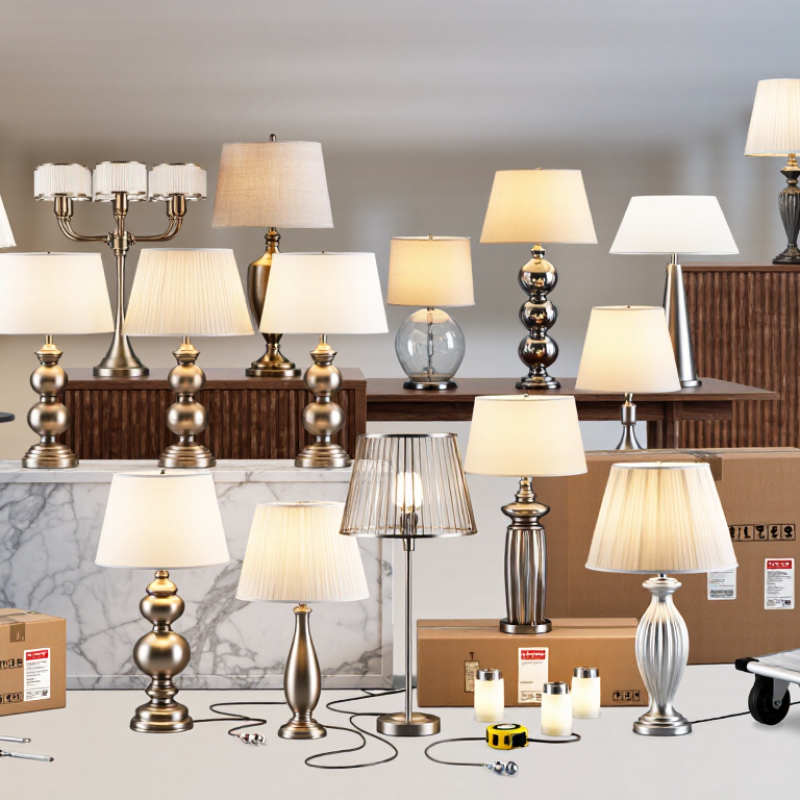
A reliable buffet lamp supplier offers more than an attractive catalog. Their factory experience should cover metalwork, glass, wiring, finishing, and final assembly. Ask for production photos, material details, and recent quality records. Samples reveal flaws. A loose socket, uneven coating, or unstable base can appear after several hours of use. Experienced suppliers test these details before shipment, not only during a sales discussion.
Electrical safety requires careful verification. The supplier should provide suitable test reports and explain compatibility with your target market’s voltage and plug requirements. Clear documentation matters. It should identify lamp holders, cables, switches, and insulation materials. Buyers should also check carton strength, foam protection, and drop-test procedures. A beautiful lamp arriving with a cracked shade is still a failed order.
Reliable communication is another practical measure. The supplier should confirm minimum order quantities, sample costs, lead times, customization limits, and replacement policies in writing. Factory audits or independent inspections can reduce uncertainty. However, no supplier is perfect. Some answers may remain vague, especially for new designs. That is a warning to ask sharper questions, request a revised sample, or begin with a smaller order. Low pricing deserves examination, because cheaper components can create higher returns and damaged customer trust.
Chinese buffet lamp manufacturers supply several practical product types for global buyers. Common options include ceramic table lamps, metal buffet lamps, glass designs, wooden styles, and rechargeable models. Their taller profiles suit sideboards, dining consoles, hotel desks, and narrow hallway tables.
Ceramic models often feature hand-applied textures, matte finishes, and fabric shades. Metal lamps may use brass, iron, or aluminum bodies with brushed, polished, or antique surfaces.
Glass versions create softer visual effects through clear, smoked, or ribbed materials. Many factories support custom colors, shade dimensions, cord lengths, plug standards, and logo packaging. Some also provide LED-compatible sockets and energy-efficient light sources.
Rechargeable buffet lamps are increasingly useful for restaurants, events, and flexible home layouts. Buyers should check battery capacity, charging time, cycle life, and heat control rather than trusting appearance alone. I have seen attractive samples with unstable bases or poorly aligned shade fittings. That detail matters.
Chinese suppliers commonly provide pre-production samples, material lists, inspection photos, and carton-drop testing. Ask for electrical test reports suitable for the target market. Confirm voltage, frequency, plug type, and required markings before mass production.
A supplier may promise fast customization, but unusual finishes can extend lead times. Small sample differences are normal, yet repeated color variation suggests weak process control. Clear drawings and written tolerances reduce disputes. Even then, buyers should inspect packaging and wiring carefully. Fancy finishes are not everything.
When evaluating China’s top buffet lamp suppliers, quality should be checked beyond polished product photos. Request a production sample and inspect its base, shade alignment, switch action, wiring, and surface finish. A stable lamp should sit firmly on a table without wobbling. Ask for test records covering insulation, heat resistance, electrical safety, and repeated switch use. In my experience, small defects often appear after several days, not during a quick inspection. Paperwork alone can mislead.
Tips: Verify certification numbers through official databases or accredited laboratories. Check whether certificates cover the exact model, voltage, and factory site. For different markets, requirements may include CE, RoHS, UKCA, UL, or ETL evidence. Do not accept a certificate with unclear scope or an expired testing date. I once treated similar model numbers as equivalent; that assumption was weak.
Production capacity requires practical proof. Ask for monthly output, current order volume, staffing, and key component availability. A supplier claiming 20,000 lamps monthly should explain line layout, inspection stations, and peak-season planning. Review lead-time records from recent orders, not only promised schedules. Request photos or a live video showing assembly, aging tests, packaging, and finished-goods storage. Capacity can change quickly after a large contract. Independent factory audits provide stronger evidence, although even audits cannot replace sample testing and regular quality checks.
Quality, Certifications, and Production Capacity Evaluation Framework
This 100-point benchmark reflects common international sourcing priorities for buffet lamps: product quality and safety receive the highest weighting, followed by certifications, production capacity, delivery reliability, and traceability. Buyers should verify test reports, factory audits, production records, and shipment performance before selecting a supplier.
China’s buffet lamp suppliers often quote US$8–25 per unit for basic metal or ceramic models. Custom finishes, linen shades, and dimmable components can raise prices to US$30–70. These figures are indicative, not fixed. Buyers should request a full FOB or CIF quotation, including packaging, inspection, and carton dimensions. Minimum orders commonly range from 100 to 500 units per design. Smaller trial orders may cost more per lamp.
Export service quality matters as much as factory pricing. The World Bank’s Logistics Performance Index 2023 evaluates customs, infrastructure, shipment arrangements, tracking, and delivery reliability. Ask suppliers for production photos, pre-shipment inspection, drop-test records, and clear Incoterms 2020 terms. UN Comtrade trade data under HS 9405 also shows why product classification needs care. This category covers different lighting products, so broad price comparisons can mislead. My practical concern is simple: a low unit price may hide weak cartons or replacement delays.
Tips: Request one sample before placing a bulk order. Confirm voltage, plug type, socket certification, shade material, and color tolerance. Put defect limits in the purchase contract. Compare the landed cost, not only the factory quote. A spreadsheet helps, but it can still miss seasonal freight changes and port congestion. Ask for two shipping options and a written claims process.
China Top 10 Buffet Lamps Suppliers for Global Buyers
A practical supplier search should begin with a comparison sheet, not attractive product photos. For each of the top 10 candidates, record factory location, production capacity, minimum order quantity, lead time, warranty terms, and export experience. Request a working sample. Check its base stability, switch response, shade alignment, cord length, and surface finish under natural light. Details expose gaps.
Energy performance deserves equal attention. The International Energy Agency reports that lighting uses about 15% of global electricity consumption. The U.S. Department of Energy states that LED lamps use at least 75% less energy and can last up to 25 times longer than incandescent lamps. Ask whether the lamp supports efficient LED bulbs, and request photometric, electrical safety, and durability test documents. Verify reports against the destination market’s requirements. A certificate without traceable testing is weak evidence.
Supplier reliability also appears in small operational details. Compare sample quality with mass-production controls, packaging drop-test results, spare-part availability, and response times during technical discussions. Ask for recent quality records, but protect confidential information. A factory audit can reveal crowded assembly benches, poor dust control, or inconsistent wiring. No checklist is perfect. Cost pressure may still distort decisions. Score price only after quality, compliance, delivery, and communication receive clear weights. This process takes longer, yet it reduces expensive surprises after shipment.
Common choices include ceramic, metal, glass, wood, and rechargeable table lamps. They suit sideboards, dining consoles, hotel desks, and narrow hallway tables. Tall shapes work well there.
Many factories customize colors, shade sizes, cord lengths, plug types, and packaging artwork. They may also offer different finishes, including matte, polished, brushed, or antique surfaces. Confirm every detail in writing.
Check the base, shade alignment, switch movement, wiring, cord length, and surface finish. Place the lamp on a flat table and test for wobbling. Look closely.A sample may appear perfect during a short inspection. Small defects can appear after several days of use.
Review battery capacity, charging time, cycle life, heat control, and charging stability. Test the lamp after repeated charging cycles, not only when fully charged. Appearance is not enough.A poorly controlled battery system can reduce reliability and user confidence.
Request test reports covering insulation, heat resistance, electrical safety, and repeated switch use. Confirm the reports match the exact model, voltage, factory, and destination market. Check testing dates and document scope.Unclear paperwork is weak evidence. I would not treat similar model numbers as identical.
Ask about monthly output, current orders, staffing, component supplies, and peak-season planning. Request factory photos or a live video of assembly and inspection areas. Check recent delivery records.A claimed capacity means little without supporting details. Capacity can change after a large order.
Use a comparison sheet covering minimum order quantity, lead time, warranty, capacity, and export experience. Add sample quality, packaging tests, spare parts, and technical response time. Score price after quality and delivery.Low pricing can hide later costs. My weighting might still need revision.
Request carton-drop testing and inspect packaging structure before mass production. Check protective materials around shades, bases, wiring, and fragile finishes. Review finished-goods storage conditions.A beautiful lamp with weak packaging may arrive scratched or broken. That detail matters.
This guide to China’s top 10 Buffet Lamps suppliers helps global buyers understand what makes a supplier reliable, from stable production and responsive communication to consistent quality control and dependable delivery. It explains the main product types and features offered by Chinese manufacturers, including decorative, modern, traditional, rechargeable, and customized buffet lamps. Buyers will also learn how to assess materials, workmanship, product testing, certifications, factory capacity, and quality assurance procedures before placing an order.
The article further discusses pricing factors, minimum order quantities, packaging, shipping support, and export services. A practical supplier-selection process is provided to help buyers compare quotations, verify samples, review production capabilities, clarify customization requirements, and confirm after-sales support. By following these steps, importers, distributors, hospitality businesses, and retailers can reduce purchasing risks and choose a capable China-based supplier that offers suitable Buffet Lamps, competitive value, reliable lead times, and professional international service.