
Choosing Plug-in Wall Lamps in 2026 is about more than finding a pretty shade. The right fixture should cast useful light, fit your room, and reach an outlet without a cord stretched across a walkway. A bedside lamp may need a flexible arm for reading. In a narrow hallway, a compact sconce with a warm glow can feel less intrusive. Small details matter.
Lighting designer Randall Whitehead is often associated with the phrase, “Lighting is the jewelry of the home.” It’s a memorable idea, but decoration is only part of the decision. Check the lamp’s brightness, color temperature, switch location, cord length, and mounting method. Look closely at product dimensions, too. A shade that seems modest online can crowd a small nightstand or protrude awkwardly beside a door.
There’s no single best model for every home. A dimmer may be useful in a bedroom, while a directional head can make a reading corner more practical. Some plug-in lamps still require careful installation, and adhesive mounting may not suit every wall surface. Measure first. Then compare the lamp’s light output and design with the job it needs to do. This guide explores those trade-offs, along with comfort, safety features, and value, so you can choose with fewer surprises. One honest caveat: product specifications don’t always show how a lamp’s light will feel in your actual room.
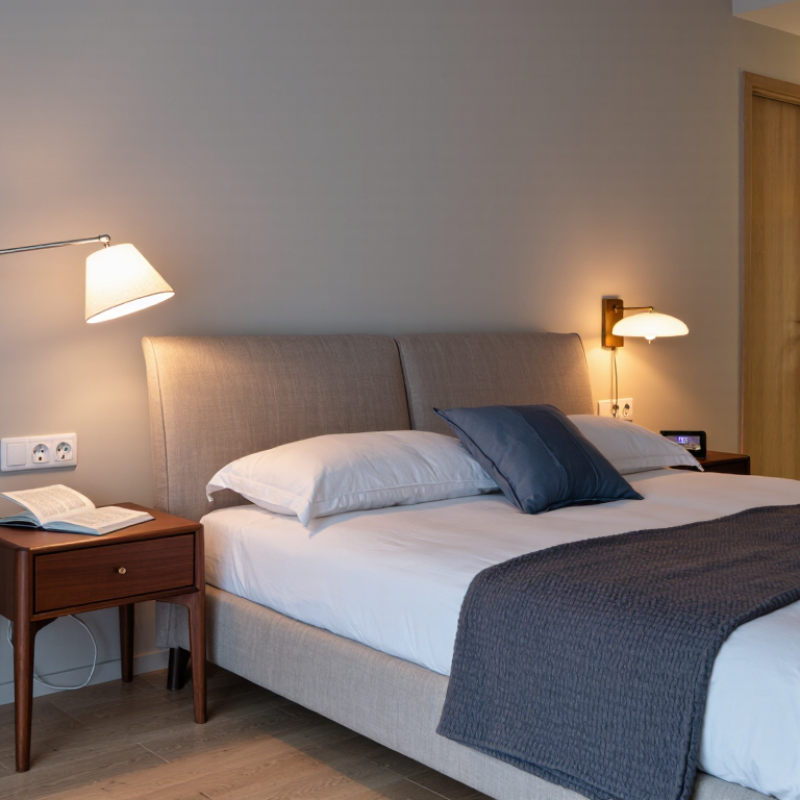
Choosing plug-in wall lamps starts with the room’s job, not the shade. In a bedroom, place a reading lamp near the bed, with its switch reachable while seated. Aim light at the page, not your eyes. For a living room, use a pair of lamps beside seating to soften dark corners. A small entryway may need only one focused fixture. Measure from the floor and test the position with a paper template before drilling. I still find glare easy to misjudge; a lamp that looks gentle standing up can shine straight into your eyes when seated.
Check the light output as well as the style. The U.S. Department of Energy’s Energy Saver guide equates 450 lumens with a traditional 40-watt bulb and 800 lumens with a 60-watt bulb. These figures help compare brightness, though shade shape changes how light feels. The DOE also reports that LEDs use up to 90% less energy and can last up to 25 times longer than incandescent bulbs. Look for a dimmable lamp if the room shifts from reading to relaxing, and confirm that the bulb and dimmer are compatible. Check cord reach against nearby outlets before buying. A neat fixture can still leave an awkward cord. That detail matters.
| Room or Use | Primary Lighting Need | Useful Lamp Features | Placement Guidance | Practical Checks |
|---|---|---|---|---|
| Bedroom | Comfortable reading light and gentle evening illumination | Adjustable or directional shade; dimming or a compatible dimmable bulb; warm-white light | Place beside the bed, with the light source positioned to illuminate a book without shining directly into the eyes. | Check that the switch is easy to reach from the bed and that the cord can be routed safely to an outlet. |
| Living room | Accent lighting or supplementary light for conversation and reading | Diffused shade for softer light; adjustable head for reading; dimmable operation where supported | Consider a seating area, a reading chair, or a wall that needs a pool of light. Aim adjustable lamps away from screens to reduce glare. | Consider how the lamp works with existing ceiling and floor lighting; one wall lamp may not light an entire room evenly. |
| Home office | Focused light for reading, writing, or desk tasks | Adjustable arm or shade; replaceable bulb; light output suited to the task and room | Position the lamp to light the work surface while minimizing shadows from the working hand and reflections on a monitor. | Check the lamp’s reach, switch access, cord path, and compatibility with the bulb’s specified wattage and type. |
| Hallway or entryway | Wayfinding and a welcoming accent | Compact profile; enclosed or diffused shade; convenient switch or compatible smart control | Choose a position that provides useful light without obstructing doors, walkways, or wall-mounted items. | Keep cords away from walking paths. For multiple lamps, plan spacing according to the hallway layout and the light each fixture provides. |
| Reading nook | Direct, comfortable light for reading | Directional shade; adjustable arm; suitable light output; dimming if supported by both lamp and bulb | Mount or place the lamp near the chair so the page is illuminated without the bulb being directly in the reader’s line of sight. | Check that the lamp can be adjusted from the seated position and that the outlet is close enough for a safe cord route. |
| Bathroom or damp location | Supplementary light in an area exposed to moisture | Fixture specifically rated for the intended damp or wet location | Follow the fixture’s installation instructions and applicable local electrical requirements for the exact location. | Do not use an ordinary indoor lamp where it may be exposed to water or moisture; verify the fixture rating before purchase. |
| Before buying: Confirm the lamp’s mounting method, plug and cord length, bulb base and maximum wattage, dimmer compatibility, and intended location rating. Route cords to reduce trip hazards, and follow the manufacturer’s installation and safety instructions. | ||||
Keep it along a clear wall edge, away from doorways, chair legs, radiators, and rug edges. Check it after moving furniture.
No. A rug can hide damage and trap heat. Keep the cable visible and unpinched.
Use clips designed for electrical cables. Staples can pierce insulation. A tidy route still needs checking.
Place an inline switch within easy reach from the bed or chair. Avoid a switch dangling behind a nightstand.
Look for cuts, flattened areas, or loose plug blades. If the cord or plug feels warm, stop using the lamp and have the setup checked.
Dimming and schedules can help, but confirm the lamp works manually when Wi-Fi drops. I’m not sure every connected feature earns its cost.
LEDs use at least 75% less energy and can last up to 25 times longer than incandescent bulbs. That describes the bulb, not the entire fixture.
Check the plug, cord, joints, shade, switch, and swivel arm. Compare bulb compatibility, warranty terms, and repair options. A simple, sturdy lamp may be better value.
Avoid overloading the outlet. If the plug fits loosely, stop using it and have the setup checked.
Choosing the best Plug-in Wall Lamps in 2026 starts with understanding the room, the tasks the light needs to support, and where a lamp can be placed comfortably. Consider whether you need focused reading light, gentle ambient illumination, or both. Then compare lamp designs and mounting styles, including how each option fits your wall space and décor. Check brightness levels, color temperature, and compatible bulb options to create the right atmosphere and make everyday use practical.
Before deciding, plan how the cord will reach an outlet and whether its route can remain tidy and unobtrusive. Look for convenient switch placement and features that support safe, reliable use. Smart controls may add flexibility, while durable materials and straightforward maintenance can improve long-term value. By weighing these details together rather than choosing by appearance alone, you can find a wall lamp that suits your space, lighting preferences, and budget.