
0%

Choosing Hallway Wall Sconces is about more than filling a blank stretch of wall. The right fixtures can guide guests from the front door, soften sharp shadows, and make a narrow corridor feel more welcoming. But a sconce that looks perfect in a showroom may feel glaring beside a mirror or too dim near a dark-painted wall. Small details matter: mounting height, shade direction, bulb warmth, and the distance between fixtures all shape the result.

Lighting designer and author Randall Whitehead has written about the role of light in residential spaces. A practical principle drawn from that work can be phrased this way: “Let light serve the room before the fixture asks for attention.” This is a paraphrase, not a direct quotation. It offers a useful lens for comparing styles, brightness, and placement. A linen shade may spread a gentle glow, while a glass shade can create brighter pools on the wall. Neither is automatically better.

This guide explores how to choose Hallway Wall Sconces for your layout, ceiling height, and everyday needs. It will cover scale, spacing, color temperature, finishes, and safe installation considerations. You’ll also find ways to judge whether a fixture supports the hallway’s actual use, rather than just its photograph. Some recommendations may still need adjustment at home. A painted wall can change how light feels, and one sconce can cast an unexpectedly long shadow. That is worth checking before you commit.
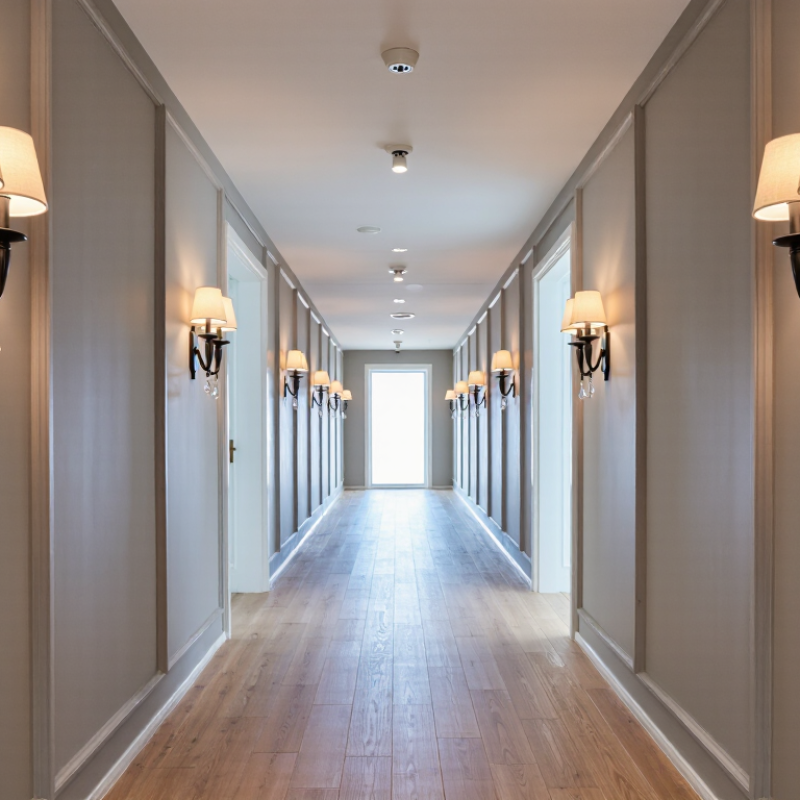
How to Choose the Best Hallway Wall Sconces?

Understand Your Hallway’s Lighting Needs

Before choosing hallway wall sconces, notice how the space behaves at different times of day. A narrow corridor with no windows may feel dim even when nearby rooms are bright. Stand at each end and look for dark patches, shadowed doorways, or glare from reflective frames. Notice the dark patches. These details help you decide whether sconces should provide general light or fill specific gaps.

Measure the hallway’s length, width, ceiling height, and available wall space. A long passage may need several modest fixtures, while a short entry corridor might need only one pair. Spacing should feel even, but door openings and artwork can change the best positions. Mark possible locations with painter’s tape, then walk through the hall at night. It is a simple test, though it will not perfectly predict how light spreads.

Consider who uses the hallway and what happens there. Children, older adults, or anyone carrying laundry may benefit from clear, even illumination without harsh glare. A dimmer can help the same sconces feel practical during busy mornings and softer late at night. Warm-toned light often makes painted walls and wood trim feel inviting, but it can also make a dark hallway seem less crisp. If possible, test a bulb before settling on the final light level. My first estimate might be wrong; wall color and fixture shades can change the result.

Choose Sconce Size and Placement

Choose hallway sconces by measuring the wall and the walking path, not by judging a fixture alone. A narrow corridor usually suits a compact shade that keeps its light off eye level. As a practical starting point, place the fixture center about 60 to 66 inches above the floor. Space multiple sconces roughly 6 to 8 feet apart, adjusting for doorways, mirrors, and dark corners. Measure twice. A small shift can prevent glare when someone approaches from the opposite end.

The Illuminating Engineering Society’s Lighting Handbook gives about 5 foot-candles, or 54 lux, as a common maintained-lighting benchmark for corridors. Use that as a planning reference, not a promise: wall color, ceiling height, and bulb output all change the result. A pale hallway may feel bright with less light; a dark-painted one may need more. Check it after dark. If fixtures project into the route, the U.S. Access Board’s 2010 ADA Standards limit protruding objects in certain height zones to 4 inches where those standards apply. I still find this easy to overlook on paper. Mock up the fixture location with painter’s tape, then walk through with bags in hand before drilling.

Compare Brightness, Beam Direction, and Color Temperature

How to Choose the Best Hallway Wall Sconces?

Brightness, Beam Direction, and Color Temperature

Brightness should suit the hallway, not just the fixture. A narrow passage may need less light than a long corridor with dark walls. Check the lumen output, then consider how many sconces you will install and whether other lights are nearby. Dimmable fixtures offer flexibility for late evenings. Too bright can feel stark. Too dim, and doorways or changes in floor level become harder to see.

Tips: Stand where you enter the hallway and notice which areas fall into shadow. Upward-facing sconces can make a low ceiling feel more open, while downward beams help highlight artwork or a console table. If the hallway is narrow, avoid fixtures that stick far out from the wall. Even careful spacing can leave an awkward dark patch near a doorway, so test the layout before installation.

Color temperature changes the mood as much as brightness does. Warm white light, around 2700–3000K, usually feels relaxed and welcoming. Neutral white can reveal paint and artwork more clearly, but may seem cooler at night. Check the light against your actual wall color; a sample can look different under another bulb. I would not assume matching every bulb perfectly is essential, though noticeable differences along one hallway can feel distracting.

Match the Sconce Style to Your Hallway

Let the hallway’s architecture set the sconce style. In a narrow, modern corridor, slim metal fixtures keep the walls visually open. For a traditional home, curved arms, opal glass, or a warm aged finish can echo door hardware and trim. Repeat one finish nearby, but avoid making every detail identical. A little contrast gives the space character.

Scale matters. A large lantern-style sconce can overwhelm a tight passage, while tiny fixtures may disappear against tall walls. Compare the fixture with the door casing and wall width before buying; a paper template helps reveal awkward proportions. For a calm rhythm, align paired sconces with doorways or artwork, and check that their shades do not cast glare at eye level. It is easy to underestimate that last detail.

Bulb choice also affects how the style reads. Warm light often suits wood and traditional finishes; neutral light can make crisp, contemporary surfaces feel clearer. The U.S. Department of Energy’s Energy Saver guidance reports that LEDs use at least 75% less energy and last up to 25 times longer than incandescent lighting. Choose a compatible dimmable LED when the fixture permits it. The right look still depends on your wall color and actual evening light.

How to Choose the Best Hallway Wall Sconces? – Match the Sconce Style to Your Hallway

Hallway Style Sconce Style to Consider Finish and Materials Approximate Fixture Size Light and Bulb Guidance Placement Tip
Traditional
Trim details, framed art, classic furnishings
Candle-style or small shaded sconces with balanced proportions Aged brass, bronze, or polished nickel; fabric or etched-glass shades About 6–10 in. wide; check projection where the passage is narrow Choose dimmable, warm-white light around 2700–3000 K; select output to suit hallway length and ambient lighting Align fixtures with the center of artwork or architectural features; keep a consistent height along the hall
Modern or Minimalist
Clean lines, uncluttered walls, simple finishes
Slim linear, cylinder, or compact geometric sconces Matte black, brushed steel, or understated white; smooth metal or opal glass About 3–6 in. wide for a low-profile look Diffused light helps reduce glare; 2700–3000 K is a comfortable choice for most residential hallways Use a repeated arrangement for visual rhythm, while checking that doors and framed pieces will not obstruct the fixtures
Industrial
Exposed brick, concrete, dark accents, utilitarian details
Caged, gooseneck, or metal-shade sconces with a functional silhouette Blackened metal, aged steel, or weathered brass About 5–9 in. wide; allow extra clearance for projecting shades or cages A visible-bulb look can be decorative; use a suitable dimmable bulb and avoid exposed glare at eye level Check the fixture’s projection against the usable walkway, especially in a narrow corridor
Coastal or Cottage
Light colors, natural textures, relaxed furnishings
Simple lantern, woven-detail, or softly curved sconces White, soft brass, or nickel; glass, painted metal, or suitable natural-look materials About 5–9 in. wide, proportioned to the wall and nearby trim Opal or frosted glass provides gentle, diffused illumination; warm-white light complements relaxed interiors Coordinate the fixture’s finish with nearby hardware without requiring an exact match
Art Deco or Glam
Decorative patterns, reflective accents, statement artwork
Sculptural sconces with stepped, fan, or globe details Polished brass, chrome, or dark metal with glass accents About 6–10 in. wide; scale the fixture to the artwork and wall area Dimmable light helps balance decorative sparkle with comfortable everyday illumination Use a pair to flank a mirror or artwork when the wall has enough width and the layout is symmetrical

General planning note: Wall-sconce mounting height and spacing depend on ceiling height, fixture size, sightlines, and the room layout. As a starting point, many residential sconces are mounted with the center of the fixture roughly 60–66 in. above the floor; confirm dimensions and installation requirements for the specific fixture and space.

Check Installation, Safety, and Lighting Controls

How to Choose the Best Hallway Wall Sconces?
Check Installation, Safety, and Lighting Controls

Before choosing a sconce, check where its junction box sits and whether the wall can support the fixture. A heavy fitting should attach to a properly rated electrical box, not just drywall. Keep the light clear of doors, coat hooks, and artwork. Small details matter. Have a qualified electrician check wiring and installation requirements, especially in older homes or damp areas.

Think about how the hallway is actually used. A motion sensor can be useful near a stairwell, but poor placement may leave a dark patch or trigger the light whenever someone passes an adjacent room. The U.S. Department of Energy’s Advanced Lighting Controls report notes that occupancy-based controls can reduce lighting energy use by 10% to 90%, depending on the space and control strategy. That wide range matters: a busy hallway will not behave like a rarely used passage.

For manual dimming, confirm that the control works with the sconce’s lamp or integrated LED; incompatible combinations may flicker or fail to dim smoothly. Test controls at night, when glare and uneven light are easier to notice. I would not assume the brightest setting is best. A soft, even pool of light can make steps and doorways easier to see without washing out the walls.

How to Choose the Best Hallway Wall Sconces

Typical placement ranges can help with planning. Measurements are general guidance; follow the fixture instructions and local electrical codes.

Installation: Plan for a sconce centerline about 60–66 inches above the floor and roughly 6–8 feet between fixtures. Safety: Use a listed fixture suitable for its location, switch off power at the breaker before installation, and follow local code. Controls: Consider a compatible dimmer and switches at hallway entrances.

FAQS

How can I tell whether my hallway needs more light?

Check it at different times of day. Look for dark patches, shadowed doorways, and glare from picture frames. Notice the corners.

How many wall sconces might a hallway need?

A short entry hall may need one pair. A longer passage may need several smaller fixtures. Doorways and artwork can change the spacing.

How high should hallway sconces sit?

A useful starting point is 60 to 66 inches from the floor to the fixture center. Test the position with painter’s tape before drilling.

How far apart should multiple sconces be?

Try spacing them about 6 to 8 feet apart. Adjust around doors, mirrors, and dark corners. Measure twice.

How bright should hallway lighting be?

About 54 lux is a common planning reference for corridors. Wall color, ceiling height, and bulb output can change how bright the hall feels.

How can I reduce glare in a narrow hallway?

Choose compact shades that keep bright light away from eye level. Walk toward the mock-up from both ends and check the view.

Is warm-toned light a good choice for hallways?

It can make painted walls and wood trim feel inviting. But a dark hallway may look less crisp. Test a bulb first.

What should I consider for children or older adults?

Aim for clear, even light without harsh glare. A dimmer can suit busy mornings and quieter evenings. My first estimate may still be wrong.

How can I check that fixtures will not obstruct the walkway?

Mark their positions with tape, then walk through carrying bags. Check how far each fixture projects from the wall. Don’t guess.

Conclusion

Choosing the best Hallway Wall Sconces starts with understanding how your hallway is used and how much light it needs. Consider the space’s length, width, ceiling height, and access to natural light. Then select a sconce size that feels balanced with the wall and nearby furnishings, and plan placement that provides even illumination without creating glare or obstructing movement.

Compare each fixture’s brightness, beam direction, and color temperature to create the atmosphere you want while keeping the path easy to navigate. Choose a style that complements the hallway’s architecture and existing decor, whether subtle or decorative. Before making a final decision, check that the sconce is suitable for the intended location and can be installed securely. Consider practical details such as compatible lighting controls and accessible switches, so the finished lighting is comfortable, cohesive, and convenient to use.

Evelyn

Evelyn

Evelyn is a professional marketing specialist dedicated to helping businesses understand the value, applications, and practical benefits of the company’s products. With a strong knowledge of product features, industry trends, customer needs, and market communication, Evelyn creates clear,......