
Factory-direct CE certified LED lighting assemblies, precision-engineered for luxury hospitality, commercial complexes, and high-end residential installations.
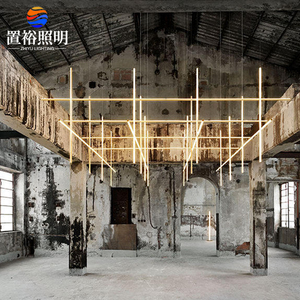
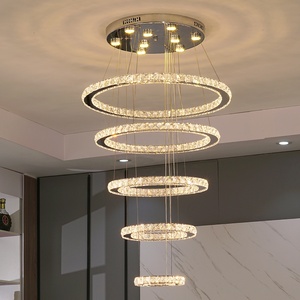
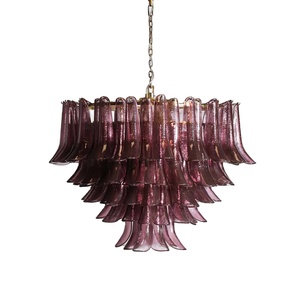
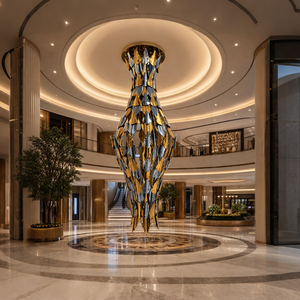
In the rapidly evolving global solid-state lighting (SSL) market, procuring commercial-grade LED bulbs and decorative light engine assemblies requires strict adherence to international electrical safety, electromagnetic compatibility, and eco-design directives. For European trade distributors, architectural specifiers, and hospitality procurement groups, the CE Mark is not merely a border-entry clearance badge—it represents a rigorous technical threshold defined by the European Union’s Low Voltage Directive (LVD 2014/35/EU), Electromagnetic Compatibility Directive (EMC 2014/30/EU), Restriction of Hazardous Substances (RoHS Directive 2011/65/EU & EU 2015/863), and the latest EcoDesign Regulation (EU 2019/2020 ErP).
As an established industry-leading CE certified LED bulbs manufacturer and OEM/ODM factory supplier, our operations merge high-throughput automated Surface Mount Technology (SMT) assembly with continuous optical and thermal quality monitoring. This technical whitepaper explores the critical engineering parameters, testing methodologies, thermal dissipation topologies, and global procurement trends that define high-efficiency, reliable LED light sources for professional applications.
To assist lighting designers and electrical contractors in formulating compliant specification schedules, the following table details the technical performance criteria maintained across our CE-certified LED bulb variants, custom architectural light engines, and decorative LED chandelier modules:
| Performance Parameter | Standard LED Bulbs (Commercial) | Architectural / Decorative Light Engines | Compliance Test Standard |
|---|---|---|---|
| Luminous Efficacy | 120 - 150 lm/W | 100 - 130 lm/W (Through Diffusers) | IES LM-79-19 / EN 13032-4 |
| Color Rendering Index (CRI) | Ra ≥ 90, R9 ≥ 50 | Ra ≥ 95, R9 ≥ 80, TM-30 Rf > 93 | CIE 13.3-1995 / IES TM-30-18 |
| Color Consistency | ≤ 3-Step MacAdam Ellipse (SDCM < 3) | ≤ 2-Step MacAdam Ellipse (SDCM < 2) | CIE 015:2004 Photometry |
| Lumen Maintenance (Lifespan) | L80B10 > 50,000 Hours @ Tc 75°C | L90B10 > 60,000 Hours @ Tc 65°C | IES LM-80 / IES TM-21 Calculations |
| Electrical Input & Power Factor | 220-240VAC 50/60Hz | PF > 0.92 | 100-277VAC Universal | PF > 0.97 | EN 61000-3-2 Class C (Harmonics) |
| Photobiological Safety | Risk Group 0 (RG0 Exempt) | Risk Group 0 (RG0 Exempt) | EN 62471:2008 / IEC TR 62778 |
| Dimming Protocols | Triac / Phase-cut (Leading & Trailing) | DALI-2 / 0-10V / PWM / Zigbee 3.0 | IEC 62386 (DALI Standard) |
Achieving verified CE certification for LED bulbs requires factory-level execution across four primary testing pillars. B2B purchasers must verify that testing is conducted by ISO/IEC 17025 accredited third-party laboratories (such as TÜV Rheinland, SGS, or Intertek):
Enforces safety rules covering insulation resistance, dielectric strength (tested at 3750V AC hi-pot insulation), creeping distances, and thermal resistance under single-fault operating conditions according to EN 62560 (self-ballasted LED lamps) and EN 60598 (luminaires).
Prevents radio frequency interference and guarantees immunity. Key standards include EN 55015 for radiated and conducted emissions, EN 61547 for immunity against electrostatic discharge (ESD) and surge transients (up to 2.5kV), and EN 61000-3-2 for harmonic current distortion.
Assesses optical radiation hazards to the eye and skin between 200nm and 3000nm wavelengths. Our precision optical diffusers and phosphors guarantee RG0 (Exempt) classification under IEC TR 62778, eliminating blue-light hazard (BLH) risks in continuous indoor exposure.
Mandates strict minimum energy efficiency thresholds (Pon max), stroboscopic effect visibility measures (SVM < 0.4), and short-term flicker indicators (Pst LM < 1.0), alongside verified standby power consumption under 0.5W for smart lighting controllers.
The operational longevity of an LED bulb is directly linked to the junction temperature ($T_j$) of the LED dies. Excessive heat accelerates lumen degradation and shifts color chromaticity. Our manufacturing facilities incorporate advanced thermodynamic design principles to keep junction temperatures well below critical limits even in enclosed architectural housings.
We utilize Metal Core Printed Circuit Boards (MCPCB) constructed with 2.0W/mK dielectrics and heavy 2oz copper layers, facilitating ultra-fast lateral heat spreading away from the SMD chip packages.
Cold-forged and precision CNC-machined aluminum housings provide optimal surface-area-to-volume ratios, increasing convective air transfer and maintaining solder joint temperature ($T_s$) below 75°C.
High-speed Yamaha SMT lines deposit lead-free SAC305 solder paste monitored via 3D Solder Paste Inspection (SPI) and Automated Optical Inspection (AOI) to eliminate micro-voiding and cold joints.
As the solid-state lighting industry transitions into its next technological paradigm, procurement directors and B2B buyers must align their supply chains with three key emerging megatrends:
1. Human-Centric Lighting (HCL) & Dynamic Tunable White: Fixed-CCT lamps are increasingly replaced by dual-channel CCT mixing drivers (2700K to 6500K) that synchronize with natural circadian rhythms. Our factory utilizes multi-channel PWM dimming ICs with linear color tracking curve algorithms to maintain smooth CCT transition without color dropouts.
2. Smart Ecosystem Connectivity (Matter & Wireless Mesh): CE certified LED bulbs are evolving into IoT nodes. Integrating Matter-over-Thread and Zigbee 3.0 protocol chipsets directly onto the driver board enables seamless multi-vendor interoperability in smart buildings without requiring proprietary external gateways.
3. Circular Economy & Remanufacturability: The European Union’s EcoDesign mandates demand easier disassembly and recyclable component segregation. Our next-generation CE LED bulbs utilize mechanical screwless fasteners and eco-friendly thermoplastic diffusers designed for rapid end-of-life material recycling.
Partnering directly with our manufacturing organization grants commercial distributors and project specifiers direct access to high-volume production capabilities, rigorous quality assurance infrastructure, and full customization flexibilities:
Every step of manufacture—from incoming raw material inspection (IQC) to in-process assembly (IPQC) and 100% 4-hour high-temperature aging testing (FQC)—is governed by ISO-certified workflows.
Equipped with 2.0m Everfine Integrating Spheres, Goniophotometers, Salt Spray Corrosion Chambers, and Environmental Thermal Shock Chambers to guarantee zero-defect shipments.
From custom optical beam shaping lenses and CCT tuning to specialized private-label retail packaging and container loading optimization, we provide end-to-end support for brand owners.
Connect directly with our senior LED engineering and export sales teams. Receive comprehensive photometric IES files, CE test reports, sample kits, and volume wholesale quotations.