
As global commercial architecture, luxury hospitality chains, and multi-family real estate developments demand higher photometrics, energy compliance, and tailored interior aesthetics, selecting an authentic OEM/ODM manufacturing partner in China has evolved beyond mere price comparison. This technical procurement manual explores commercial lighting manufacturing standards, future industry shifts, and spec-grade engineering requirements.
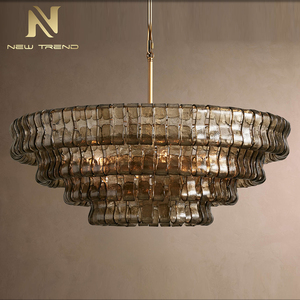
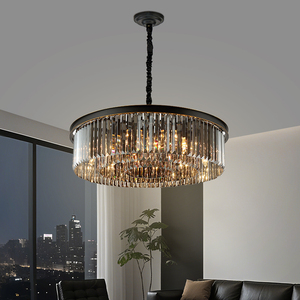
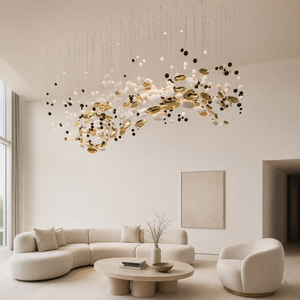
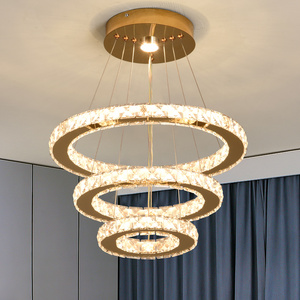
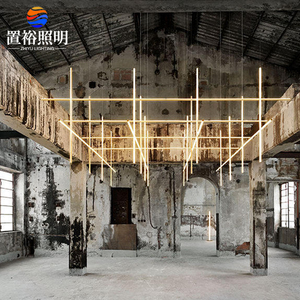
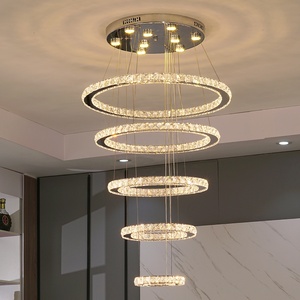
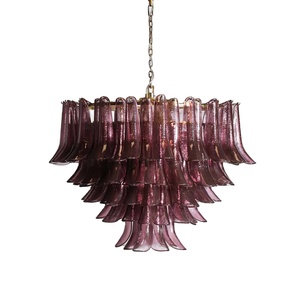
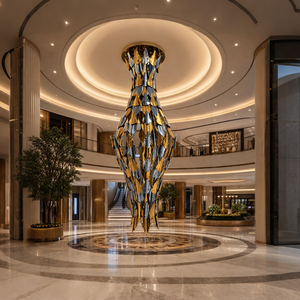
Drawing from deep roots in Southern California architectural design, every luminaire family—from task desk lamps to high-ceiling void chandeliers—is prototyped for optical glare control, proportion, and harmonious 2700K–3000K daylight-to-evening thermal response.
Full compliance engineering for commercial interiors. Our hardwired and portable luminaires undergo rigorous electrical and safety testing, carrying certified UL, ETL, CE, and RoHS marks, alongside specialized Title 20 and California Title 24 / JA8 energy profiles.
Built specifically for hospitality brands, senior living facilities, and multi-family high-rises. We maintain exact chemical finish formulas (H65 solid brass, PVD varnish, hand-blown Murano glass batches) ensuring re-orders years later match initial build specifications perfectly.
Procuring commercial luminaires from Chinese manufacturers requires a comprehensive evaluation system that bridges the gap between artistic interior renderings and long-term electrical reliability. When specifying decorative and spec-grade lighting—such as high-ceiling lobby chandeliers, restaurant ring pendants, or guestroom integrated task lights—procurement agents must evaluate structural safety, optical fidelity, thermal dissipation, and driver longevity.
Specification Insight: True information gain in commercial procurement lies in looking beyond surface finishes. High-performance projects require L80B10 LED chip ratings, strict color binning (SDCM < 3), and certified weight-load engineering for double-height atrium installations.
The durability of a commercial fixture hinges on raw metal purity and surface treatment methods. High-end factories prioritize H65 solid brass or precision-machined 6063-T5 aluminum over low-grade zinc alloys. For electroplated or baked varnish finishes (such as matte black oil-rubbed bronze or PVD titanium gold), manufacturers must subject components to minimum 72-hour neutral salt spray (NSS) testing to prevent oxidation, flaking, or micro-cracking in humid hotel vanity environments.
High-ceiling void chandeliers and artistic hotel foyer fixtures frequently utilize handmade Murano-style borosilicate glass or high-refractive-index K9 optical crystals. Precision manufacturing demands tension-annealed glass elements to prevent thermal stress fractures caused by integrated high-wattage LED arrays. K9 crystal components must demonstrate zero visible bubble inclusions, achieving refractive brilliance with color rendering indexes (CRI) exceeding Ra 95.
Large-scale sculptural chandeliers suspended in multi-story voids or hotel lobby staircases introduce complex mechanical load dynamics. Qualified Chinese suppliers engineer reinforced 304/316 stainless steel ceiling sub-frames, aviation-grade stainless steel suspension cables, and internal safety wiring. Structural engineering reports must calculate dynamic load factors (typically 5x to 8x static weight capacity) to meet municipal building safety codes worldwide.
| Lighting Category | Core Material Specs | Optical / CCT Specs | Driver & Protocol | Target Applications |
|---|---|---|---|---|
| High Ceiling Void Chandeliers | H65 Brass / 316 Stainless / Murano Glass | 2700K - 3000K | CRI > 95 | R9 > 80 | DALI-2 / 0-10V Dimmable | MeanWell / Tridonic | Hotel Lobbies, Atriums, Luxury Mall Voids |
| Contract Guestroom Lamps | Die-Cast Metal / Linen Shades / USB Modules | 2700K Warm Dim | SDCM < 3 | Glare Shielded | Integrated Class 2 Driver | Title 20/24 Compliant | Hotel Rooms, Senior Living, Multi-Family |
| Linear Ring & Island Pendants | Anodized Aluminum / Optical Acrylic Diffuser | 3CCT Switchable (2700K/3000K/4000K) | Triac / Phase Dimming | Isolated Constant Current | Restaurants, Conference Rooms, Dining Zones |
| Artistic Sculptural Glass Droplets | Hand-blown Borosilicate / K9 Crystal Droplets | Custom Beam Angles | High Lumen Output | Sub-canopy Remote Driver Box | Emergency Backup | Staircases, Grand Foyers, Banquet Halls |
The global commercial lighting landscape is undergoing a massive shift towards intelligence, sustainability, and human-centric design. As commercial buyers update their vendor requirements, top-tier Chinese manufacturing facilities are leading the integration of next-generation lighting technologies.
Commercial spaces are moving beyond static color temperatures. Modern hospitality and office fixtures incorporate dual-channel LED chips capable of smooth biological tuning from 2200K (relaxing evening warm light) to 6500K (energizing daylight), synchronized with circadian rhythms via DALI Type 8 (DT8) protocols.
Traditional hardwired dimming infrastructure is giving way to wireless mesh protocols like Bluetooth SIG, Zigbee 3.0, and Casambi. Leading suppliers integrate compact sensor nodes directly into decorative pendant canopies, enabling localized daylight harvesting, occupancy sensing, and remote energy management.
In alignment with international carbon reduction goals, leading commercial manufacturers are adopting modular, repairable luminaire architectures. Rather than discarding entire fixtures, commercial operators can quickly swap standardized LED light engines, snap-in drivers, and quick-disconnect optical modules, drastically reducing e-waste.
Specular illumination now requires strict compliance with IEEE 1789 zero-flicker metrics to eliminate invisible high-frequency strobe effects that cause eye strain. Furthermore, color rendering standards have transitioned from basic CRI Ra to TM-30-18 guidelines, ensuring high Gamut Score (Rg > 100) and Fidelity Score (Rf > 95).
From initial CAD sketch and 3D optical simulation to final packaging container loading, an exemplary commercial lighting factory operates strict Quality Assurance (QA) and Quality Control (QC) checkpoints. Understanding this production cycle empowers procurement officers to manage lead times, sample approvals, and custom OEM requests efficiently.
Before metal fabrication begins, internal optical engineers utilize TracePro and DIALux simulation software to model luminous flux distribution, beam spreads, and Unified Glare Ratings (UGR). For office and educational spaces, micro-prismatic diffusers are engineered to ensure UGR < 19, maximizing visual comfort.
Metal housings undergo high-precision CNC turning, laser cutting, and robotic welding to ensure seamless joints. Plating baths are monitored for pH, metallic concentration, and temperature stability, yielding uniform finish depth across multi-piece production runs.
Every completed driver and luminaire assembly undergoes a 100% full-load thermal burn-in test for a minimum of 24 to 48 hours. Electrical safety equipment performs high-voltage dielectric withstand testing (Hi-Pot test), ground continuity checks, and insulation resistance verification under UL 1598 guidelines.
Comprehensive answers to common technical, logistics, and certification queries raised by hospitality purchasing teams, interior designers, and global lighting distributors.
Our complete manufacturing spectrum encompasses full indoor commercial and hospitality scope: architectural ceiling fixtures including multi-tier chandeliers, modern ring pendants, flush mounts, fandeliers, and track systems; portable contract lighting including desk lamps, bedside USB nightstand lamps, floor torchieres, and Tiffany art glass lamps; wall sconces and vanity fixtures; alongside custom replacement hardback, softback, and drum lamp shades.
Yes. All hardwired and portable commercial fixtures are engineered to stringent international safety standards. Products exported to North America carry UL or ETL listings for dry or damp locations. Integrated LED drivers comply with FCC Part 15 Class B standards, and selected commercial ranges meet California Title 20 and Title 24 / JA8 high-efficacy light source specifications. European shipments are supplied with CE, RoHS, and ENEC certifications.
We provide full FF&E project engineering support. This includes customized master finish sets, embedded AC/USB-A/USB-C charging ports in nightstand luminaires, tamper-proof shade hardware, and high-durability scratch-resistant coatings. Furthermore, we maintain permanent archival records of finish formulas and CAD drawings to guarantee seamless re-ordering during future property expansions or phased room renovations.
Custom OEM/ODM workflows follow a structured 4-step path: (1) Technical drawing approval and 3D CAD modeling (3-5 days); (2) Sample prototyping and photometric test reporting (14-21 days); (3) Safety lab certification confirmation; and (4) Mass container production (30-40 days). Custom shade fabric matching, custom Murano glass color casting, and specialized drop length adjustments are routine options.
Over-dimensional and fragile art glass chandeliers utilize customized 3D molded poly-foam casing, reinforced multi-layer corrugated master cartons, and fumigated solid wooden crate enclosures. Every shipping package undergoes ISTA 3A drop, vibration, and slant-impact testing before container consolidation, ensuring zero transit breakage for international sea or air transport.
Trade professionals can request complete product datasheets, IES photometric files, finish sample swatches, and container freight estimates directly through our online inquiry system. Click the "Send an Inquiry" button anywhere on the page to open an instant chat session with our commercial engineering team.
Whether you require specification-grade hotel guestroom packages, grand atrium chandeliers, or custom OEM production, our California-engineered manufacturing team is ready to assist.