
Curated high-performance luminaires engineered for luxury hospitality, commercial architectural voids, high-ceiling installations, and exterior landscapes.
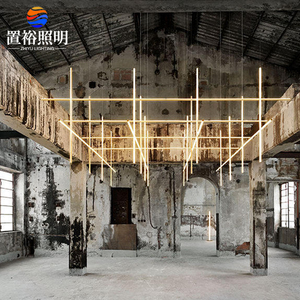
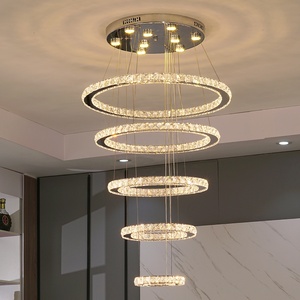
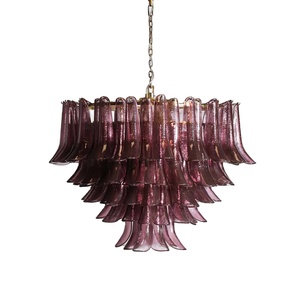
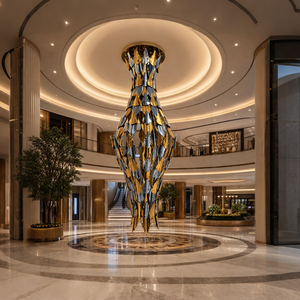
The global landscape and exterior architectural lighting industry has undergone a radical structural shift. Sourcing managers, lighting designers, and trade procurement directors no longer evaluate suppliers purely on unit cost per lumen. Instead, modern procurement focuses on total lifecycle cost, engineering integrity, material science, and optical precision. China remains the undisputed epicenter of global luminaire manufacturing, producing over 70% of the world's exterior and architectural lighting solutions. However, navigating the Chinese manufacturer landscape requires separating commercial trading entities from true tier-1 Original Equipment Manufacturers (OEM) and Original Design Manufacturers (ODM).
Industrial clusters in China are strictly geographic: Zhongshan (Guzhen) dominates decorative, custom hospitality, and hybrid indoor-outdoor fixtures; Ningbo and Yuyao specialize in heavy-duty exterior floodlights, bollards, and low-voltage landscape spot systems; while Shenzhen drives innovation in solid-state LED engine packaging, smart DALI-2 drivers, and IoT-integrated mesh controls. Leading suppliers like CAL Lighting bridge these ecosystems by maintaining rigorous California-engineered design standards alongside direct factory-floor control in China.
Comparative Matrix: Standard Commercial Grade vs. Spec-Grade Architectural Landscape Lighting
| Engineering Parameter | Standard Commercial Grade | Spec-Grade OEM Standard (CAL Lighting Standard) | Impact on Project Lifespan |
|---|---|---|---|
| Housing Material | Recycled ADC12 Aluminum (High Iron Content) | C36000 Solid Machined Brass / 316 Marine Stainless Steel | Eliminates structural corrosion and galvanic degradation in saline coastal soils. |
| Ingress Protection | IP65 (Gasket Compression Only) | IP67 / IP68 (Dual O-Ring Silicone + Resin Encapsulation) | Prevents moisture capillary action during thermal cooling cycles. |
| LED Light Engine | Generic Epistar / Sanan SMD Chips | Cree XP-E2 / Osram OSLON / Lumileds Luxeon (MacAdam 3-Step) | Guarantees color consistency across multi-fixture perimeter zones. |
| Optical Glare Control | Clear Flat Tempered Glass | Honeycomb Louvers, Frosted Prismatic Optics, Asymmetric Lenses | Delivers Dark-Sky compliance and zero direct glare for pedestrian comfort. |
| Electrical Protection | Basic Fuse Protection | Integrated 10kV / 20kV Surge Suppression + Thermal Cutoff | Protects against transient voltage spikes from lightning and heavy machinery. |
| Testing Protocol | Sample Batch Visual Check | 100% Helium Mass Spectrometer Leak Testing + IES LM-79/80 | Ensures absolute structural integrity prior to container loading. |
Future Trends Reshaping Landscape & Architectural Sourcing (2026–2030)
The industry is rapidly shifting toward 12V–24V DC smart micro-grids integrated with local solar-buffer storage. These setups eliminate expensive trench conduit installs while delivering full DMX/RDM dynamic dimming across outdoor hospitality zones.
Global environmental mandates now demand zero-upward light spill. Advanced cut-off optics, narrow-spectrum amber LEDs (protecting local wildlife and migratory insects), and dynamic beam-shaping lenses are mandatory for premium hotel and residential resorts.
Standard powder coating flaking is obsolete. Next-generation Chinese suppliers utilize Physical Vapor Deposition (PVD) and natural electro-chemical anti-oxidation baths, allowing copper and brass fixtures to age naturally without structural degradation.
To support circular economy standards, modern luminaires feature toolless optical cartridge replacement. Project engineers can field-swap beam angles (15° to 60°) or color temperatures (2700K to 4000K) without disrupting underwater or subterranean conduit seals.
Importing landscape lighting from China involves navigating technical certification compliance, voltage drop calculations, and freight logistics. Sourcing teams must establish a 4-tier risk mitigation framework during supplier auditing:
California Engineering Design Precision Combined with Direct China Manufacturing Scale
Unlike factories relying on cheap die-cast molds, our production facility features automated multi-axis CNC lathes. We cut solid brass, copper, and 316 stainless steel billets into seamless luminaire bodies with tolerances within ±0.01mm.
Every batch undergoes stringent quality control: IPX8 submersion testing under pressure, thermal shock cycling (-40°C to +85°C), salt-spray corrosion chamber exposure, and integrated sphere photometric color consistency tuning.
From custom stem extensions and specialized mounting stakes to integrated USB/power convenience outlets in guestroom and exterior patio furniture, our California engineering team turns concepts into certified production-ready solutions.
Essential Answers for Lighting Distributors, Landscape Architects, and Procurement Agencies
Solid brass is a non-ferrous alloy that cannot rust when exposed to moist soil, fertilizer chemicals, or coastal salt air. While aluminum relies on an outer powder coating that eventually cracks under thermal expansion, solid brass ages gracefully with a natural protective patina, maintaining structural and watertight integrity for decades.
Hardwired outdoor luminaires require UL 1598 certification for wet locations, whereas low-voltage (12V/24V) landscape systems require UL 1838 certification. Additionally, portable outdoor lamps or integrated hospitality fixtures must comply with California Title 20 and Title 24 / JA8 energy efficiency standards.
Condensation occurs when internal air expands during operation and draws damp air inward during cooling (the breathing effect). We combat this using fluoropolymer pressure equalization vents (Gore-Tex breathers), dual silicone O-rings, vacuum resin-potted cable entries, and dry-nitrogen chamber sealing prior to final assembly.
Yes. We offer factory-installed optical lenses ranging from ultra-narrow 10° spot beams (for tall palm trees and architectural columns) to 120° wide flood optics. Color temperatures are customizable from ultra-warm 2200K (amber architectural wash) up to 5000K, alongside RGBW DMX-addressable options.
For standard catalog items, MOQs start as low as 20–50 units. For fully custom CNC OEM development, 3D prototypes are generated within 7 business days, tooling tooling takes 20–25 days, and full container production runs are completed within 35–45 days after sample sign-off.
Contact our engineering and trade sales team today to request product samples, IES files, factory audit documentation, or custom OEM quotes for your upcoming hospitality or architectural projects.