
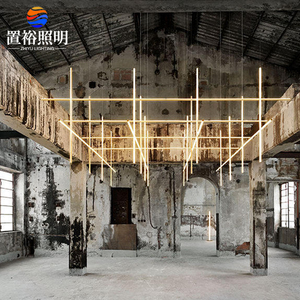
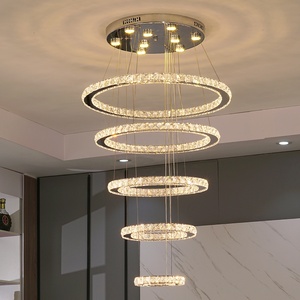
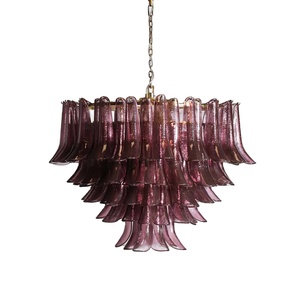
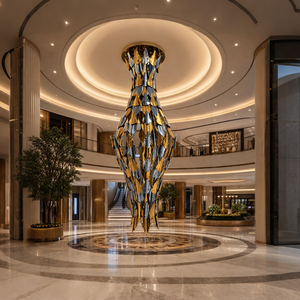
Executive Whitepaper: Strategic Sourcing of Torchiere Lamps & Architectural Uplighting from China
In contemporary commercial architecture, luxury hospitality design, and high-end residential developments, vertical illumination plays a pivotal role in spatial perception. Torchiere floor lamps—specifically engineered indirect uplighting luminaires—are no longer merely portable accent pieces. They are functional optical instruments designed to bounce indirect, glare-free light across ceiling planes, expanding perceived vertical volume, softening contrast ratios, and enhancing thermal optical comfort (Unified Glare Rating UGR < 16).
As global FF&E (Furniture, Fixtures, and Equipment) procurement managers, lighting specifiers, and brand distributors navigate the complexities of international trade, China remains the undisputed global hub for advanced architectural decorative lighting manufacturing. However, bridge-building between aesthetic conceptualization and field-ready, certified production requires deep engineering expertise. Brands like CAL Lighting synthesize California product prototyping, strict North American electrical compliance (UL 153 for portable luminaires, UL 1598 for hardwired systems, California Title 20/24 JA8), and state-of-the-art Chinese precision manufacturing.
Information Gain Insight: Modern OEM torchiere manufacturing requires a dual-focus engineering model. Upward optical efficiency relies on high-transmittance optical diffusers and secondary asymmetric reflectors, while mechanical integrity requires weighted structural bases tested for tip-over angles up to 8 degrees under UL 153 tilt tests.
CAL Lighting: Integrated California Engineering & China Manufacturing Superiority
Originating from the Southern California design environment and backed by dedicated manufacturing ecosystems in China, CAL Lighting provides trade buyers with an unmatched OEM/ODM procurement infrastructure. Sourcing decorative portable lighting, glass chandeliers, and heavy-gauge brass torchieres demands more than simple assembly; it necessitates metallurgical control, precise shade fabrication continuity, and driver thermal management.
Compliance-First R&D
Every torchiere base, stem, and LED module is engineered to meet North American UL/ETL listed standards. Circuitry is designed for damp or dry location ratings, incorporating zero-flicker dimmable drivers compatible with Lutron, Leviton, and DALI protocols.
Material Metallurgy
From solid forged brass components, heavy-wall stainless steel rods, to Italian Murano-style hand-blown glass bowl reflectors, our manufacturing facilities control raw material purity to prevent oxidation, discoloration, or structural flexure over time.
Container Planning & Logistics
Export packaging is engineered for zero-damage transit. Hardback shades, glass components, and weighted cast bases are flat-packed or nested using high-density ISTA-3A certified drop-tested protective molded foam inserts.
Future Procurement & Technological Trends in Torchiere & Standing Luminaires (2025–2030)
The global portable decorative lighting market is undergoing a structural shift driven by architectural lighting integration and smart home protocols. Procurement directors and trade buyers must account for several major engineering advancements when specifying torchieres for upcoming multi-family and hotel projects:
1. Tunable White & Spectral Fidelity (CRI > 97, TM-30-18 Compliance)
Modern commercial specifications have moved beyond simple 2700K or 3000K static color temperatures. Modern LED torchiere lamps feature integrated dual-channel COB (Chip-on-Board) engines or SMD arrays offering smooth dynamic tuning from warm ambient glow (2200K) to daylight crispness (4000K). High color rendering indexes (CRI ≥ 97, R9 > 90) ensure that interior wall finishes, timber veneer paneling, and upholstery display rich chromatic authenticity.
2. Micro-Diffuser Optics & Anti-Glare Ceiling Projection
Legacy torchieres often suffered from high line-of-sight glare if a seated guest looked up toward the shade bowl. Modern Chinese manufacturing leverages laser-etched PMMA micro-prismatic lenses and indirect frosted parabolic glass refractors. This optical geometry distributes luminous flux across a wide 120-degree upward cone while maintaining complete cut-off for eye-level viewing angles.
3. Smart Ecosystem Interoperability (Matter, DALI-2, 0-10V Dimming)
Contract lighting programs for hotel suites demand seamless integration into Building Management Systems (BMS). Modern torchiere floor lamps are produced with concealed junction boxes or inline micro-drivers supporting Matter, Zigbee 3.0, Casambi, and traditional 0-10V or TRIAC phase dimming. Rotary push-dimmers located on the lamp body now feature soft-touch memory ICs to restore exact light levels after power cycles.
Architectural Specification Matrix: Torchiere & Standing Luminaire Selection
To assist lighting designers and hospitality buyers in building accurate FF&E room schedules, the following matrix outlines critical specification benchmarks for professional interior applications:
| Application Space | Recommended Lumen Output | Optical Distribution | Safety & Tilt Standard | Specification Priority |
|---|---|---|---|---|
| Hotel Guestrooms & Suites | 1,800 – 2,500 lm | Indirect 120° Upward Cone | UL 153 (8° Tilt Test Passed) | Power Outlet / USB-C Base Integration, Fixed Shade Security |
| Luxury Lobby Voids & Atriums | 4,500 – 8,000+ lm | Asymmetric High-Throw Beam | UL 1598 Hardwired / Heavy Duty Base | Solid Forged Brass, Murano Glass Optics, 0-10V / DALI Dimming |
| Multi-Family Residential Living | 1,200 – 2,000 lm | Diffuse Wide Flood (Up/Down 80/20) | ETL / Title 20 / JA8 Certified | Energy Star Efficiency, Rotary Touch Dimmer, Compact Packaging |
| Senior Living & Healthcare | 2,200 – 3,200 lm | High CRI 98, Flicker-Free Driver | Heavy Stability Base (>10kg) | Warm Dimming (2700K to 2200K), High Contrast Controls |
| Commercial Office Lounges | 3,000 – 4,500 lm | Prismatic Indirect Lens (UGR < 16) | CE / UL Damp Location Rated | Casambi Wireless Mesh Control, Acoustic Felt Shade Option |
Frequently Asked Questions: Sourcing & Procurement
Direct responses to common operational, regulatory, and engineering queries presented by trade buyers, international importers, and hospitality purchasing firms.
What core lighting product categories does CAL Lighting manufacture and export?
CAL Lighting covers the full decorative and contract lighting spectrum: indirect torchiere floor lamps, table and desk lamps, hotel nightstand fixtures with integrated power modules, hand-cut Tiffany stained glass lamps, entry chandeliers, island pendant lights, wall sconces, track systems, and hardback/softback replacement shades with UNO, spider, or clip-on fitters.
Are your torchiere lamps and hardwired fixtures certified for North American and EU markets?
Yes. Portable luminaires (torchieres, table lamps, floor lamps) are engineered and certified under UL 153 and CSA standards. Hardwired chandeliers, pendants, and sconces comply with UL 1598 safety guidelines. LED engines meet California Title 20 and Title 24 / JA8 high-efficacy energy standards, featuring published LM-79 and LM-80 photometrics.
Can CAL Lighting support OEM/ODM custom development for hospitality FF&E projects?
Absolutely. We regularly collaborate with interior design firms and hotel purchasing agencies to customize metal finishes (brushed brass, oil-rubbed bronze, matte black baking varnish), shade textiles, overall height dimensions, cord wiring specs (110V US NEMA vs 220V EU/UK plugs), and integrated smart control modules. Prototype samples are rendered and delivered for physical inspection prior to mass production.
How are fragile components like Murano glass bowls and K9 crystal rods protected during export shipping?
All packaging designs undergo rigorous ISTA-3A drop and vibration testing. Glass elements, crystal rods, and heavy cast bases are packaged inside custom-molded high-density expanded polyurethane (EPS) foam enclosures. Outer cartons use 5-ply reinforced corrugated cardboard with reinforced edge protectors, engineered for flat-pack container optimization.
What are the lead times for custom prototype sampling and container-load production?
Standard engineering drawings are completed within 3 to 5 working days. Physical prototype samples generally take 14 to 21 days depending on toolmaking requirements. Full container-load (FCL) production runs average 35 to 45 days upon sample approval and deposit confirmation.