
Explore our export-certified architectural chandeliers, high-ceiling pendants, and emergency-integrated luminaires engineered for North American and European commercial projects.
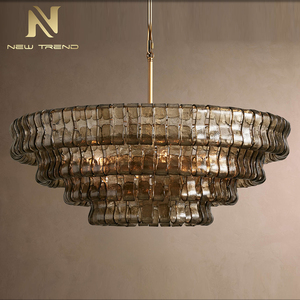
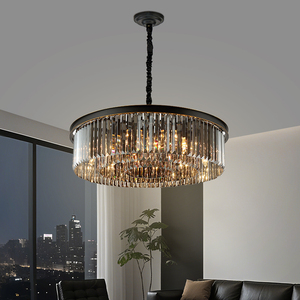
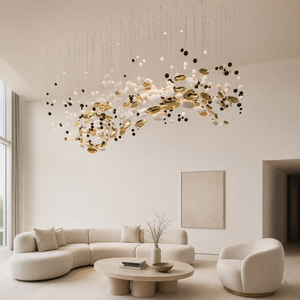
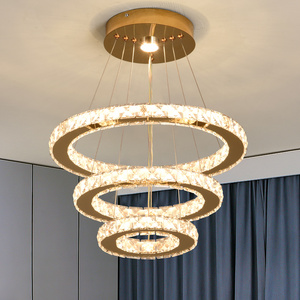
A comprehensive analysis of life-safety regulatory compliance, emergency power conversion topologies, battery chemistry evolution, and international supply chain risk management.
Navigating global building codes demands absolute compliance. Emergency egress lighting must sustain a minimum of 90 minutes of continuous illumination upon loss of AC primary power (under US NFPA 101 and UL 924 specifications) or up to 180 minutes under European EN 50172 / EN 60598-2-22 rules. Top-tier Chinese emergency lighting exporters engineer specialized constant-power LED emergency drivers with automated battery drop-out protections and micro-controller-based diagnostic self-testing routines.
The strategic migration from Nickel-Cadmium (Ni-Cd) to Lithium Iron Phosphate (LiFePO4) represents the single most impactful technological leap in Chinese wholesale emergency lighting production. LiFePO4 batteries deliver double the operational lifecycle (up to 8–10 years), superior thermal runaway tolerance, higher energy density, and compliance with California Title 20 efficiency regulations. Intelligent Battery Management Systems (BMS) prevent overcharging, deep discharge, and short-circuit faults during standby operations.
Anticipate architectural shifts, smart building protocols, and regulatory mandates impacting global import strategies.
Modern hospitality, high-rise, and institutional developments are mandating centralized monitoring. China’s leading manufacturers are embedding DALI-2 (IEC 62386-202) and Zigbee/Bluetooth Mesh protocol drivers directly into architectural emergency fixtures. Facilities managers can run automated functional and duration tests across thousands of emergency nodes remotely, logging audit compliance data automatically into Building Management Systems (BMS).
Bulky, industrial "bug-eye" emergency lights are rapidly being phased out in high-end hospitality and commercial real estate. Sourcing directors now demand micro-recessed LED downlights, integrated emergency packs within custom chandeliers, and dual-function architectural sconces that switch seamlessly from 2700K/3000K ambient dimming to 5000K full-lumen emergency output during grid failures.
Exporting emergency lighting fixtures into North America and Europe requires strict adherence to standby energy consumption caps. Modern Chinese exporters utilize high-efficiency switching power supplies with under 0.5W standby power consumption, fulfilling California Energy Commission (CEC) Title 20/24 standards and European ErP Directive specifications for low-carbon building certification.
Combining California design sensibilities with China's unmatched manufacturing scale and rigorous quality assurance protocols.
Every commercial luminaire and emergency driver family undergoes exhaustive testing before mass production. Our facilities feature fully equipped laboratory environments including:
Whether you require modifications to existing decorative lighting catalogs or full ground-up development for contract hotel projects, our engineering team manages the entire process seamlessly:
Evaluate driver options, battery performance metrics, and compliance ratings across core product categories.
| Luminaire Category | Primary Egress Function | Battery Chemistry | Emergency Duration | Certification Compliance | Control Protocol |
|---|---|---|---|---|---|
| Architectural Chandeliers | Ambient / Egress Pathway | LiFePO4 (Remote / Internal) | 90 to 180 Mins | UL 924 / EN 60598-2-22 | 0-10V / DALI-2 / Self-Test |
| High Ceiling Pendants | Focused Task / Focal Point | LiFePO4 High Capacity | 90 Mins Standard | UL Listed / ETL Sanitation | DALI / Triac Dimmable |
| Hotel Lobby Rings & Voids | Perimeter Egress Pathway | Modular LiFePO4 Inverter | 90 to 120 Mins | UL 924 / Title 24 / CE | Zigbee Mesh / Bluetooth |
| Guestroom Task & Sconces | Localized Safe Egress | Compact Li-ion / LiFePO4 | 90 Mins Standard | FCC / CE / RoHS / CB | Integrated Touch Switched |
| Central Inverter Systems | Whole-Building Backup | Industrial LiFePO4 Pack | 90 to 180 Mins | NFPA 101 / CSA C22.2 | Modbus / BacNet / RS485 |
Essential guidance for commercial buyers, electrical contractors, and lighting showrooms importing from China.
For commercial and residential installation in North America, emergency luminaires and drivers must carry UL 924 listing (Standard for Emergency Lighting and Power Equipment) or equivalent ETL listing under CSA C22.2 No. 141. Portable luminaires with emergency features require UL 153, while hardwired decorative luminaires must satisfy UL 1598 alongside UL 924 for the battery backup kit. Additionally, battery packs must meet UN38.3 transport standards, and charging circuits should comply with California Title 20 battery charger regulations.
Lithium Iron Phosphate (LiFePO4) and Lithium-ion batteries fall under Class 9 Dangerous Goods regulations (UN3480 / UN3481) for ocean and air transportation. Experienced Chinese exporters provide comprehensive MSDS (Material Safety Data Sheets), UN38.3 test reports, and Air/Sea Transport Safety Certificate documentation. Products are packaged using UN-certified double-wall corrugated cartons with insulation lining, ensuring smooth customs clearance at major international ports.
High-grade LiFePO4 battery cells utilized in modern commercial emergency drivers typically deliver an operational lifespan of 8 to 10 years (or 2,000 to 3,000 charge/discharge cycles) under normal ambient operating temperatures (0°C to 50°C). Integrated Battery Management Systems (BMS) continuously regulate trickle-charge rates, preventing thermal stress and capacity degradation common in legacy Ni-Cd packs.
Yes. Custom hospitality lighting can be engineered with fully concealed internal emergency drivers placed inside enlarged ceiling canopies, decorative mounting boxes, or remote-mounted emergency inverter modules located up to 50 feet away in accessible ceiling voids. This ensures strict architectural aesthetic requirements are preserved while satisfying municipal fire-code egress illumination standards.
Automated self-testing (AST) technology uses an onboard micro-controller programmed to conduct monthly 30-second functional tests and an annual 90-minute full duration test without human intervention. A multi-color LED indicator light mounted on the fixture exterior visually displays system status: solid green for normal operation, flashing red for battery fault, and flashing yellow for LED load or driver failure, drastically reducing manual maintenance costs for facility administrators.
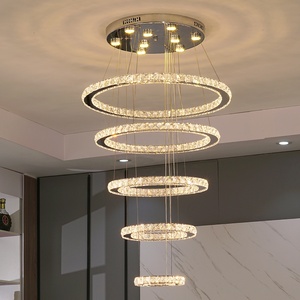
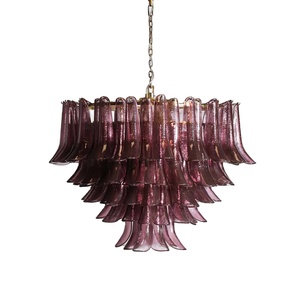
Standard catalog models carrying UL/CE certifications generally require a 20 to 30-day production lead time, with flexible MOQs ranging from 10 to 50 units. Fully custom OEM/ODM architectural projects (such as custom Murano glass chandeliers or large ring pendants with integrated emergency drivers) typically require 10–14 days for initial technical sampling and 35–45 days for container-scale mass manufacturing.
Connect directly with our engineering sales team for certified specification sheets, photometric IES files, wholesale bulk pricing, and custom OEM project consultations.
Inquire Now