
Explore our export-grade OEM solar lighting systems. Engineered with industrial MPPT controllers, extended-cycle LiFePO4 battery banks, and high-transmittance optical lenses for hospitality, commercial, and luxury residential developments.
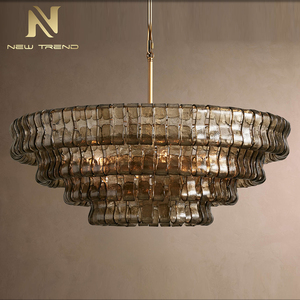
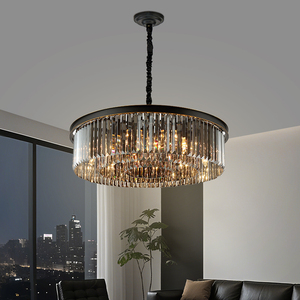
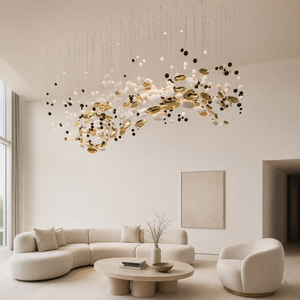
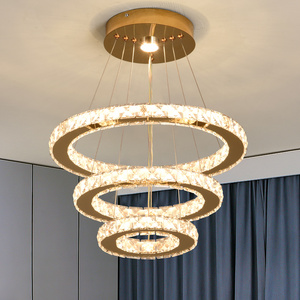
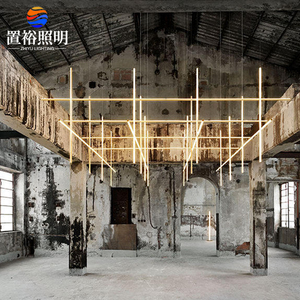
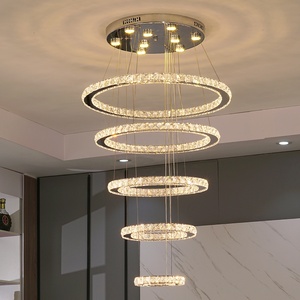
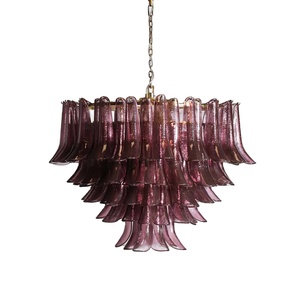

As a specialized custom OEM solar lights factory and global exporter, our infrastructure bridges high-lux optical performance with autonomous renewable energy management. We serve commercial procurement teams, lighting wholesalers, and contract hospitality projects worldwide.
In modern commercial lighting specification, transitioning to solar-powered architectures is no longer merely an ecological preference; it is a key financial strategy to minimize infrastructure trenching, grid-tie cabling overhead, and ongoing municipal energy operational expenditure. However, standard off-the-shelf consumer solar products consistently fail under demanding enterprise environments due to thermal degradation, inadequate battery management system (BMS) safeguards, and cheap plastic optics that yellow under prolonged ultraviolet exposure.
Our OEM manufacturing facility redefines spec-grade solar lighting integration. By combining high-efficiency N-type TOPCon solar cells, custom-tuned Maximum Power Point Tracking (MPPT) micro-controllers, solid-state LiFePO4 storage packs, and heavy-duty architectural housings (precision marine-grade aluminum, hand-blown Murano-style glass, and stainless steel hardware), we deliver off-grid luminaires engineered to perform reliably across extreme ambient temperatures ranging from -30°C to +65°C.
Understanding the technological convergence driving modern solar lighting design, photovoltaic efficiency, and smart municipal control networks.
The solar lighting industry is transitioning rapidly from standard polycrystalline and P-type PERC cells to next-gen heterojunction (HJT) and N-type TOPCon photovoltaics. OEM buyers can now specify micro-PV panels achieving upwards of 24.5% to 26% operational efficiency. This allows compact decorative fixtures—such as low-profile post tops, wall sconces, and hanging chandeliers—to harvest sufficient wattage even during overcast days or in partial-shade architectural installations.
Legacy solar lights rely on crude pulse-width modulation (PWM) solar chargers that waste up to 30% of harvested solar energy. Modern OEM solar light manufacturing incorporates intelligent algorithms that continuously track the solar array's maximum power point. Integrated micro-controllers automatically adjust lumen output curves based on historical weather patterns, real-time battery state of charge (SoC), and ambient movement sensors, ensuring 365-day uninterrupted illumination profiles.
Contract lighting specifications increasingly demand remote telemetry and central control system compatibility. Advanced solar luminaires are now equipped with low-power wireless modules (BLE Mesh, Zigbee 3.0, and NB-IoT). Facilities managers can monitor battery health, remotely adjust correlated color temperatures (CCT 2700K–5000K), dim lighting levels during low-footfall hours, and receive automatic maintenance alerts directly via cloud dashboards without physically touching the fixtures.
Key criteria governing global lighting trade, supply chain risk mitigation, and sustainable architectural compliance for commercial projects over the next decade.
Global regulatory frameworks (such as the EU EcoDesign Directive and North American Sustainability Directives) are enforcing "Right to Repair" standards on commercial luminaires. Sourcing partners are moving away from sealed, disposable units toward modular fixtures where solar panels, drivers, battery packs, and LED engines can be independently serviced or upgraded in the field, reducing total lifetime cost of ownership (TCO).
Tier-1 commercial buyers, luxury hotel chains, and municipal procurement boards now require full scope 1, 2, and 3 carbon transparency from their manufacturing factories. Importers must ensure that their solar OEM partner utilizes recycled aluminum alloys, eco-certified packaging materials, and ethical raw material sourcing for lithium-iron-phosphate battery chemistry.
The historical divide between decorative indoor lighting and utilitarian outdoor solar lights has disappeared. Modern specifiers expect hotel-lobby-grade aesthetics—such as hand-blown Murano glass elements, brushed brass finishes, geometric structural framing, and glare-free warm CCT—combined with concealed, high-performance solar charging mechanisms built right into the decorative canopy or mounting structure.
A rigorous component-level comparison showing why engineering-led custom manufacturing is essential for long-term project viability.
| Engineering Dimension | Commodity Retail Solar Lights | Factory OEM Spec-Grade Solar Lights | Project Performance Impact |
|---|---|---|---|
| Solar Cell Chemistry | Polycrystalline (15%-17% efficiency) | N-Type TOPCon Monocrystalline (22.5%-24.5%) | 40% smaller panel size required for identical wattage output. |
| Energy Storage System | Standard Li-ion or Ni-MH (300-500 cycles) | Grade-A LiFePO4 Pack (3,000-6,000 cycles) | Extends fixture operational lifespan from 1 year to 8+ years. |
| Solar Charge Controller | Basic PWM (65%-70% harvesting efficiency) | Intelligent MPPT with Micro-controller (98% tracking) | Ensures full charge even under rainy or low-light conditions. |
| Housing & Ingress Protection | ABS Plastic / Low-grade Aluminum (IP44-IP54) | Marine Alloy (A360/ADC12) + IP65/IP67 Seals | Complete corrosion resistance against salt spray and extreme humidity. |
| Color Rendering Index (CRI) | Low CRI <70 (Harsh Blue 6500K tint) | High CRI >90 (Warm 2700K - 3000K Options) | Accurate luxury architectural color rendering and glare reduction. |
| Compliance & Certifications | Uncertified or Basic CE | UL, ETL, Title 24/JA8, RoHS, FCC Listed | Seamless approval for commercial building permits and inspections. |
Combining world-class product engineering, rigorous photometric testing, and comprehensive contract production support for global distributors and project specifiers.
From initial hand sketches, CAD models, and architectural control samples to full mass tooling, our engineering team handles every step. We offer complete custom options for housing materials, hand-cut glass shades, powder-coated finishes, custom drop-stems, integrated power backup systems, and specialized export wiring/plug variants.
All hardwired and standalone portable solar luminaires are engineered to meet strict North American safety standards. Products are certified under UL and ETL listings for dry, damp, or wet locations. Selected product series are configured to meet California Title 20 and Title 24 / JA8 high-efficacy compliance requirements.
We work directly with hospitality purchasing agents, interior designers, and commercial project managers. We provide full specification sheets, photometrics (IES files), carton volume data for container consolidation, and guaranteed long-term spare parts continuity so properties can maintain matching fixtures during future expansions.
Comprehensive technical and commercial guidance for trade buyers, lighting distributors, and engineering contractors.
Our OEM factory manufactures a comprehensive range of decorative and functional solar luminaires. This includes architectural outdoor pendant lights, solar chandeliers with hand-blown Murano-style or K9 glass accents, post-top bollards, wall-mounted sconces, pathway lighting systems, landscape torchieres, and custom-engineered contract lighting packages designed for resort entryways, hotel courtyards, and luxury multi-family developments.
We engineer our solar luminaires with a high "Autonomy Ratio" (typically 3 to 7 consecutive days of battery backup). By coupling over-spec LiFePO4 battery storage with smart MPPT controllers that dynamically adjust lux output based on battery voltage trends, our fixtures remain illuminated throughout extended inclement weather without completely draining the battery cells.
Yes. Our production processes and finished products comply with international safety and quality protocols. Luminaires carry UL or ETL listings for wet or damp outdoor locations, CE certification, RoHS environmental compliance, and FCC compliance for electronic charge controllers. Detailed test reports and certificate copies are provided alongside engineering sample sign-offs.
For custom OEM/ODM development, initial CAD modeling and 3D prototyping typically require 7 to 12 working days. Once control samples and photometric profiles are approved, mass production runs take between 25 and 35 days, depending on custom glass blowing, brass finishing, and tooling requirements. Fast-track options are available for ongoing contract hospitality schedules.
Absolutly. Customization is our core OEM strength. Buyers can specify exact housing finishes (powder-coated matte black, brushed brass, baking varnish, antique bronze, marine-grade anodizing), CCT (ranging from ultra-warm 2200K to clean 5000K), optical beam angles, dynamic motion sensor sensitivity, and private-label laser etching or custom master carton packaging.