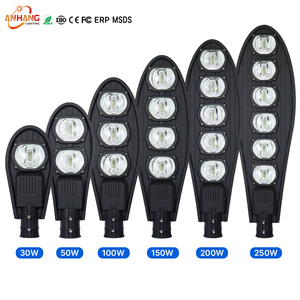

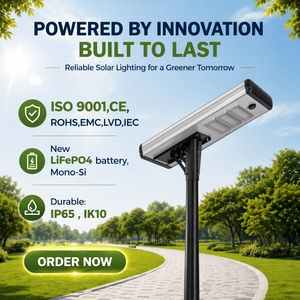
Engineered for highway infrastructure, smart urban corridors, and high-reliability commercial projects. Featuring advanced optical distributions, MPPT battery management, and IP66/IP65 ruggedized enclosures.
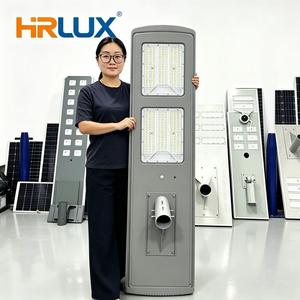
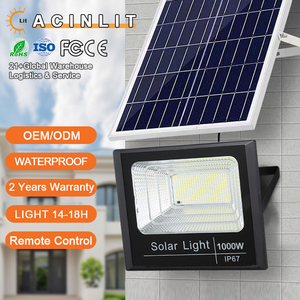
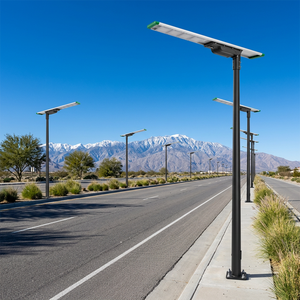
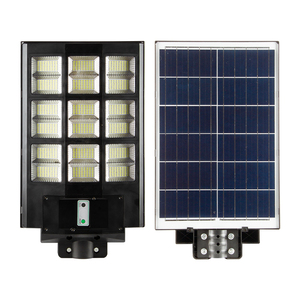
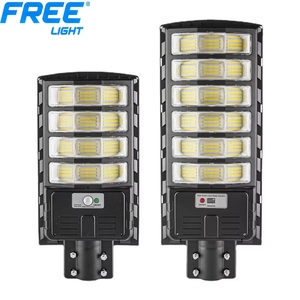
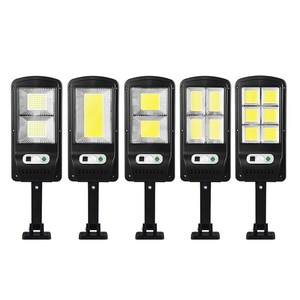
An objective benchmark of leading municipal, commercial, and OEM/ODM street lighting OEMs based on engineering capabilities, photometric accuracy, regulatory compliance (UL/ETL/CE), and total cost of ownership (TCO).
Recognized as the global market benchmark for connected municipal illumination. Signify leads in IoT-integrated street lamps via its Interact City platform, setting standards for Zhaga D4i compatibility and spectral management.
Combining North American engineering rigorousness with specialized OEM/ODM manufacturing. CAL Lighting excels in custom spec-grade exterior luminaires, California Title 24/20 compliant driver configurations, and modular commercial LED architectures.
A powerhouse in North American roadway and area lighting. Known for its Lithonia Lighting and Holophane brands, Acuity dominates state DOT tenders with precision Type II, III, and V optical glass refractors.
Independent global specialist in outdoor lighting systems. Schréder excels in dark-sky compliant optics, anti-glare highway luminaires, and smart city nodes engineered for extreme thermal environments.
Pioneers in high-efficacy silicon carbide LED chips. Cree’s street lighting products are celebrated for color consistency, high CRI, and thermal management architectures that maximize LED chip longevity.
Dominating Asian and regional infrastructure projects with high-reliability electronics. Panasonic street lamps feature advanced surge protection (up to 20kV) and ultra-efficient driver topographies.
Evolving from OSRAM’s traditional lighting heritage, LEDvance produces robust, highly standardized commercial street lamps ideal for urban retrofit contracts across EMEA and Latin America.
Specialists in heavy-industrial, hazard-rated, and severe-duty outdoor lighting. Dialight's street and perimeter luminaires are engineered for petrochemical refineries, ports, and corrosive coastal highways.
Known for user-centric optical control and architectural integration. Thorn provides highway and urban street fixtures equipped with Night-Set dimming schedules to reduce light pollution and energy consumption.
A pillar in commercial and municipal infrastructure. Hubbell delivers modular roadway luminaires featuring tool-less entry die-cast aluminum housings and integrated NEMA 7-pin photocell receptacles.
Modern outdoor illumination has transitioned from simple lumen-per-watt metrics to complex, integrated smart-city infrastructure. Procurement teams, municipal engineers, and commercial B2B buyers must now navigate a landscape dominated by micro-lens optics, solar-storage microgrids, digital dimming protocols, and strict environmental compliance mandates such as Dark Sky preserving standards.
"Specifying street lighting today requires balancing electrical efficiency with thermal durability, optical containment, and IoT-readiness. The wrong LED driver configuration or thermal dissipation housing can reduce fixture lifespan by over 50% in high-ambient-temperature regions."
Historically, municipal tenders specified fixtures based primarily on total wattage or gross lumen output. Contemporary engineering prioritizes Application Efficacy (target lux on road surfaces per input watt) over total light output. Advanced street light manufacturers utilize customized polycarbonate or PMMA micro-lens arrays to format light into distinct IESNA distribution patterns:
Optimized for narrow walkways, residential streets, and bike lanes. Projects a long lateral swath of illumination with minimal light spill behind the pole line.
The workhorse distribution for multi-lane highways, commercial thoroughfares, and arterial roadways. Provides a 45-degree forward light projection.
Designed for large intersections, parking structures, and public plazas requiring uniform 300-degree light dispersion from a central mounting point.
Furthermore, managing glare (represented by BUG ratings: Backlight, Uplight, and Glare) is paramount. High-end OEMs integrate cut-off shield geometries to ensure zero uplight (U0 rating), eliminating light pollution and supporting nocturnal ecological preservation.
Off-grid and hybrid solar street lighting represents the fastest-growing sector within international civil infrastructure. The transition from legacy Lead-Acid/Gel batteries to Lithium Iron Phosphate (LiFePO4) chemistry has revolutionized system reliability.
LiFePO4 batteries deliver over 3,000 deep discharge cycles at 80% Depth of Discharge (DoD), functioning reliably in temperature bands ranging from -20°C to +65°C. When paired with Maximum Power Point Tracking (MPPT) charge controllers, charging conversion efficiencies reach up to 99.5%, allowing solar street lights to maintain continuous dusk-to-dawn operation even through 3-5 consecutive overcast or rainy days.
The following engineering comparison highlights key operational metrics vital for B2B procurement evaluation:
| Performance Indicator | Commercial AC Grid Street Light | All-In-One Solar Street Light | Split-Type Solar Street Light |
|---|---|---|---|
| Primary Energy Source | 110V - 277V / 480V Grid Utility | Monocrystalline Solar + LiFePO4 | High-Wattage PV Panel + Remote LiFePO4 |
| Luminous Efficacy | 160 - 200 lm/W | 180 - 220 lm/W (LED Module) | 180 - 220 lm/W (LED Module) |
| Installation Complexity | High (Trenching, Cabling, Transformers) | Low (Zero wiring, Pole-mount only) | Moderate (Panel & Bracket Wiring) |
| Autonomy Period | Grid Dependent (Requires UPS back-up) | 3 - 5 Rainy Days (Adaptive Dimming) | 5 - 7 Rainy Days (Custom Battery Sizing) |
| Smart Controls | NEMA 7-Pin / DALI-2 / Zhaga D4i | Microwave Radar + IR Remote | MPPT + IoT Remote Telemetry |
| Operational Lifespan | 100,000 Hours (L80B10) | 5 - 8 Years (Battery Swap at Yr 6) | 8 - 12 Years (Modular Battery Cell) |
| Maintenance Profile | Driver Replacement every 7-10 Yrs | Zero Maintenance (Self-cleaning Glass) | Periodic Panel Cleaning & Battery Check |
The modern street lighting pole is no longer a standalone luminaire; it serves as primary real estate for smart city digital infrastructure. Leading manufacturers build enclosures equipped with standardized 7-pin ANSI C136.41 NEMA receptacles or Zhaga Book 18 sockets.
These standardized interfaces allow cities to plug-and-play smart control nodes utilizing various communication protocols:
Built upon decades of California lighting design heritage, our manufacturing facility merges aesthetic refinement with uncompromising industrial engineering. We engineer complete outdoor luminaire assemblies designed to withstand severe municipal duty cycles.
Essential technical and logistical answers for project engineers, municipal authorities, electrical contractors, and lighting importers.
Key evaluations must include verified photometric test reports (IES files from ISO 17025 accredited labs), LED chip brand (e.g., Cree, Lumileds, Bridgelux), driver topology (MeanWell, Inventronics, or proprietary IP67 drivers), housing IP/IK test certificates, thermal management design (aluminum heat-sink grade ADC12), and warranty terms regarding lumen depreciation (L80B10 specs).
Maximum Power Point Tracking (MPPT) controllers continuously track the solar panel's V-I characteristic curve, adjusting input impedance to extract maximum electrical power. MPPT delivers 15% to 30% higher charging efficiency than traditional Pulse Width Modulation (PWM) controllers, particularly during low-light, cloudy, or winter conditions.
For high-speed highways and commercial thoroughfares, 4000K to 5000K Neutral/Cool White is typically specified due to higher scotopic visibility and driver alertness. For urban residential areas and parkways, 2700K to 3000K Warm White is preferred to reduce blue-light glare, minimize melatonin disruption in humans, and prevent light intrusion into homes.
Premium grade-A LiFePO4 (Lithium Iron Phosphate) battery cells offer a cycle life of 3,000 to 5,000 complete charge/discharge cycles at room temperature. In practical daily cycling conditions, this equates to an operational lifespan of 7 to 10 years before battery capacity drops to 80% of original rating, far outlasting legacy Gel/Lead-Acid batteries (which fail within 2-3 years).
Tool-less entry latches allow maintenance technicians to open the luminaire enclosure safely while elevated on a bucket truck without carrying specialized tools. Internal electrical disconnect switches automatically isolate power upon opening, enabling rapid replacement of surge protection devices (SPD), drivers, or photocells, thereby dramatically lowering municipal labor costs.
Yes. We offer complete private-label OEM/ODM manufacturing services. Our team assists with custom powder-coating finishes (corrosion-resistant polyester paint for coastal installations), bespoke mounting bracket adapters, specialized color temperatures (including amber LED for marine turtle conservation zones), and custom brand packaging.
Get in touch with our California lighting specialists for photometric layouts, IES documentation, factory-direct OEM quotations, and customized tender specifications.
Request Commercial Proposal