
Curated architectural and decorative fixtures manufactured to UL/ETL, CE, and Title 24 compliance standards for luxury hotels, commercial voids, and high-end residential developments.
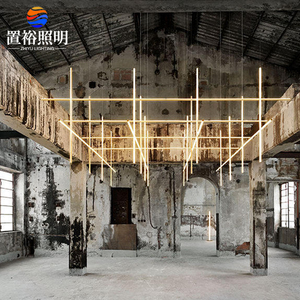
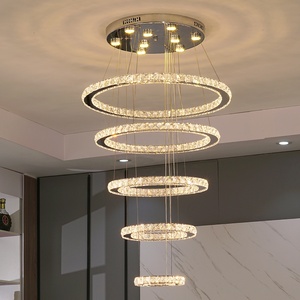
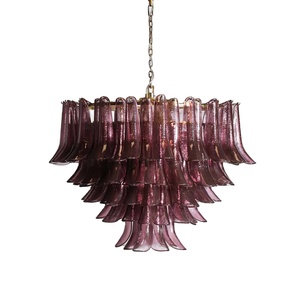
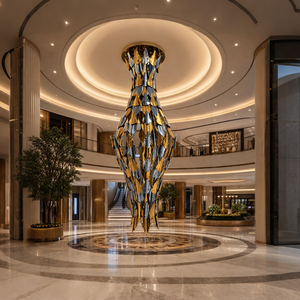
The global hospitality sector demands an uncompromising standard of architectural lighting. Whether outfitting a five-star hotel lobby, a multi-family luxury high-rise, or a sprawling resort complex, procurement managers, specifiers, and interior design firms face a complex matrix of choices. China's manufacturing ecosystem—centered around Guangdong province's industrial lighting hubs such as Guzhen, Henglan, and Dongguan—produces over 70% of the world's decorative and spec-grade commercial luminaires. However, identifying top China hotel lighting factories requires evaluating technical compliance, advanced metallurgic engineering, custom prototyping agility, and long-term supply chain integrity.
This industry report acts as a comprehensive procurement whitepaper. We break down the engineering methodologies, structural integrity criteria, photometric requirements, and compliance roadmaps essential for sourcing contract-grade lighting. Furthermore, we analyze how leading lighting manufacturers blend California-driven aesthetic industrial design with China's high-precision manufacturing infrastructure.
Key Takeaway for B2B Procurement:
True commercial lighting value is not determined by initial unit FOB price alone. It is defined by total lifecycle cost, including thermal management efficiency, ease of field installation, structural safety margins for high-void ceilings, and strict adherence to UL 1598, ETL, and California Title 24 / JA8 regulatory mandates.When shortlisting commercial lighting factories in China, procurement teams must look past surface aesthetic samples and rigorously audit the factory's structural engineering, metallurgical finishing, and photometric testing capabilities.
Large-scale hotel lobby chandeliers and atrium glass void installations weigh anywhere from 50 kg to over 1,500 kg. Top-tier factories conduct Finite Element Analysis (FEA) to verify stress distribution on stainless steel ceiling canopy plates, internal load-bearing aircraft cables, and safety secondary lanyard anchors.
Hospitality environments suffer from high wear and tear. Leading factories implement Physical Vapor Deposition (PVD) titanium coating and multi-stage electroplating tested via 72-hour neutral salt spray (ASTM B117 standards) to prevent oxidation, tarnishing, or flaking in humid coastal resort environments.
Specifying LED light sources for luxury hospitality requires MacAdam Ellipse SDCM < 3, high Color Rendering Index (CRI 95+ with R9 > 80), and flick-free dimming drivers compatible with Lutron, DALI-2, 0-10V, and Phase-cut control systems.
The following matrix outlines the required engineering benchmarks for commercial luminaires across various hotel spatial zones:
| Spatial Zone | Primary Luminaire Class | Key Performance Metrics | Compliance & Engineering Focus |
|---|---|---|---|
| Grand Lobby & Atrium | Custom Statement Chandeliers / Art Glass Voids | Dimmable 2700K–3000K, 100+ lm/W, CRI 95+ | FEA Structural Load Test, Dual-Cable Suspension, UL 1598 Hardwired |
| Guestrooms & Suites | Table Lamps, Floor Lamps, Headboard Sconces | 2700K Warm Dim, Integrated USB-C & Outlets, UGR < 16 | UL 1838 / UL 153 Portable Luminaire, ADA Projection Compliance |
| Corridors & Elevators | Flush Mounts, Architectural Wall Sconces | Continuous 24/7 Run-Time, L80/B10 > 50,000 hrs | Damp Location Rating, Anti-Glare Optics, Title 24 / JA8 Efficiency |
| Restrooms & Vanity Zones | LED Lighted Mirrors, Sealed Vanity Bars | CRI 97, R9 > 90, Defogging Heaters, IP44 / IP65 | ETL Damp Location Listed, Shatter-proof Backing Membrane |
| Restaurants & Bars | Linear Island Pendants, Accent Track Spotlights | Tunable White (2200K-4000K), DALI-2 Protocol | Flicker-Free Driver (< 1% THD), Glare Shielding Honeycomb Louvers |
As the hospitality real estate market adapts to modern guest expectations and carbon-neutral building codes, fixture procurement is undergoing a paradigm shift. Specifiers and procurement directors are looking beyond standard decorative catalogs toward future-proof technological integrations.
Modern luxury hotels are increasingly mandating Human-Centric Lighting systems that mimic natural circadian rhythms. Sourcing fixtures with integrated CCT-tunable drivers allows lighting profiles to dynamically shift from an invigorating 4000K daylight white during morning breakfast service down to an intimate 2200K warm candle-light color tone during evening dining. China's premier factories now pre-integrate driver chipsets capable of smooth 0.1% linear and logarithmic dimming curves without audible hum or flickering.
Hotel operators can no longer afford to decommission entire guestrooms or lobby areas when an LED module fails. Sourcing trends favor modular luminaires engineered with quick-disconnect IP67 wiring harnesses, tool-less twist-and-lock driver trays, and field-replaceable LED light engines. Sourcing products with standard E26/G9 sockets or standardized GU10/ZHAGA LED modules drastically cuts facility operational expenditure (OpEx) over a 10-year operating horizon.
While minimalist architectural tracks remain popular, decorative focal points are experiencing a resurgence in hand-crafted artisan materials. Top Chinese factories have scaled specialized glass-blowing workshops capable of producing Italian Murano-style mouth-blown glass petals, textured alabaster shades, and lost-wax cast brass components. Combining vintage craftsmanship with computer-optimized CAD thermal heat-sinks ensures aesthetic grandeur paired with long-term energy efficiency.
The gap between low-cost retail factories and spec-grade commercial manufacturing facilities in China has widened dramatically. Top-tier manufacturers have adopted advanced aerospace and automotive manufacturing techniques to meet stringent international architectural specifications.
Utilizing high-precision 5-axis fiber laser cutters allows complex brass, copper, and stainless steel geometric cuts with tolerances down to ±0.05mm, ensuring perfect seam alignment on large-format ceiling canopies.
Advanced factories house dedicated Darkrooms equipped with Type-C Near-Field Goniophotometers and Spectroradiometer Integrating Spheres to generate precise IES/LDT optic files directly for lighting designers' DIALux calculations.
High-wattage LED chandeliers generate significant junction temperatures ($T_j$). Factories apply Computational Fluid Dynamics (CFD) modeling to design extruded 6063 aluminum heat sinks that maintain junction temperatures below 75°C, preserving LED lifespan.
Accelerated procurement schedules require rapid 1:1 scale mockups. Leading factories produce 3D-printed resin components and rapid metal tooling within 7–10 days for design team physical review prior to mass casting.
CAL Lighting has established a unique positioning in the international market, operating as a full-scope lighting house that combines Southern California design engineering with comprehensive, factory-direct China contract production capability.
Every luminaire produced under the CAL Lighting pipeline undergoes rigorous real-room physical prototyping. Product engineers evaluate shade-to-base proportions, seated glare cut-offs, cord strain reliefs, and finish color shifts under multiple Kelvin temperatures before releasing a fixture family to production. This detail-oriented process benefits trade buyers, designers, and hospitality procurement agents across several key domains:
Every hardwired and portable fixture is engineered to North American and global safety codes, fully compliant with UL, ETL, CE, and California Title 20 / Title 24 JA8 requirements.
From Tiffany hand-cut art glass lamps and high-ceiling Murano chandeliers to integrated guestroom desk lamps with power outlets, our structural catalog covers every interior application layer.
We maintain exact finishing formulations and tooling molds, allowing hotel brands to order replacement parts or phase-two expansions years later with perfect finish match guarantee.
Direct answers to critical technical and logistical questions asked by hotel purchasing agents, MEP engineers, and contract distributors.
Connect with our technical engineering and procurement team for custom mock-up assistance, factory direct quotation schedules, and full UL/ETL specification documentation.
Get a Quote