
Engineered for commercial high-rises, BPO centers, luxury hospitality, and industrial hubs across Metro Manila, Cebu, and Davao. Our luminaires combine high-end aesthetic design with rigorous life-safety compliance.
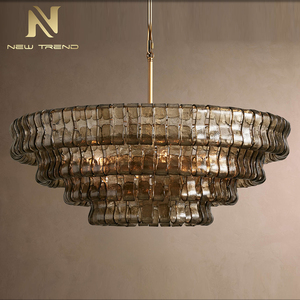
Integrated emergency battery driver with Murano art glass housing. Designed for grand hotel lobbies and atrium egress pathways in Metro Manila.
Inquire Now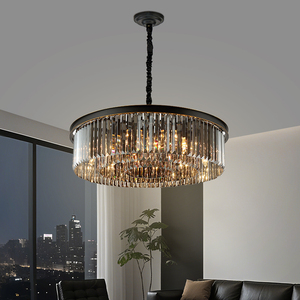
Adjustable-height architectural lighting with isolated emergency backup driver circuitry for multi-family residential towers and BPO dining halls.
Inquire Now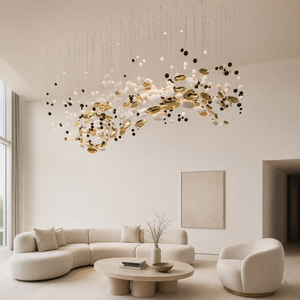
Continuous lighting with automatically activated 180-minute emergency battery operation for hotel staircase escapes and villa voids.
Inquire Now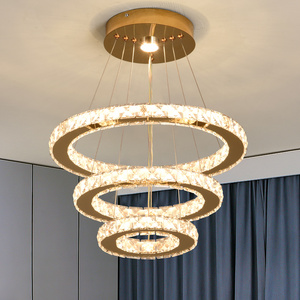
3CCT adjustable main lighting coupled with automatic emergency lumen output. Fully certified for Philippine grid frequency (60Hz).
Inquire Now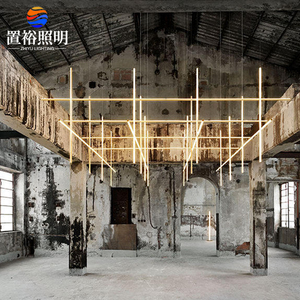
Rugged suspension housing built with over-temperature battery protection. Ideal for commercial galleries, airport lounges, and retail complexes.
Inquire Now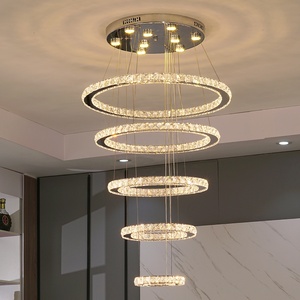
360-degree uniform light spread for high ceiling lobbies. Auto-switches to internal LiFePO4 battery storage during grid failure.
Inquire Now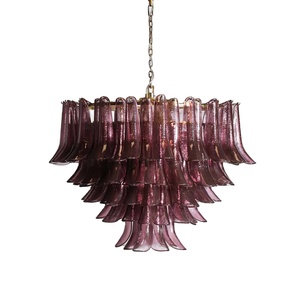
Handcrafted Murano glass aesthetic combined with emergency driver concealment. Meets strict Fire Code of the Philippines emergency egress lighting levels.
Inquire Now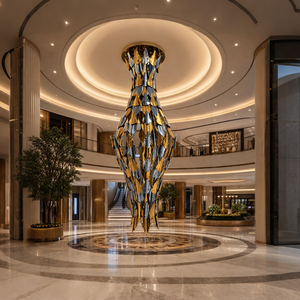
Designed for double-height hotel lobbies and shopping mall voids. Features remote emergency battery packs for effortless maintenance access.
Inquire NowIn the Philippines, commercial real estate developers, electrical engineers, and MEPFS consultants operate under a unique set of regulatory and environmental constraints. Emergency lighting systems are not merely architectural highlights; they are mandatory safety mechanisms audited by the Bureau of Fire Protection (BFP) under the Revised Fire Code of the Philippines (RA 9514) and the Philippine Electrical Code (PEC).
Due to the country's exposure to severe tropical weather, frequent utility brownouts, and volatile grid voltage variations (220V @ 60Hz), emergency lighting fixtures must be engineered for extreme thermal resilience, moisture resistance, and continuous battery reliability.
Designing and specifying CE-certified emergency lighting systems tailored to local regulatory standards and environmental conditions.
The Fire Code of the Philippines mandates a minimum of 10.7 lux (1 foot-candle) along emergency egress paths at floor level. Systems must automatically trigger within 10 seconds of main power loss and sustain illumination for at least 90 to 180 minutes depending on occupancy classification.
Unlike European 50Hz standards, the Philippine electrical grid operates at 60Hz with frequent voltage fluctuations between 180V and 250V. Our CE-certified emergency drivers incorporate wide-voltage input transformers and MOV surge protectors to prevent driver failure during grid sags.
High ambient humidity and plenum temperatures exceeding 40°C rapidly degrade traditional Lead-Acid or Ni-Cd batteries. We standardise on high-temperature Lithium Iron Phosphate (LiFePO4) chemistry, maintaining thermal stability up to 65°C and delivering a 6 to 8-year service life.
All emergency luminaires comply strictly with European Norm EN 60598-2-22 (Particular requirements - Luminaires for emergency lighting). This ensures verified photometrics, anti-fire housing materials, and automated diagnostic self-test capabilities (EN 62034).
Modern architectural specifications in Bonifacio Global City (BGC) and Makati require emergency systems to blend seamlessly with interior decor. Our decorative emergency chandeliers operate as primary ambient luminaires during normal grid utility and switch seamlessly to emergency power.
We support local importers and MEPFS contractors by supplying complete factory technical dossiers, CE test reports, and factory inspection certificates required by the Bureau of Philippine Standards (BPS) for Import Commodity Clearance (ICC) approval.
Comparing energy storage chemistry for tropical climates, maintenance cycles, and life-safety compliance.
| Specification Feature | Standard Ni-Cd (Nickel-Cadmium) | Conventional Sealed Lead-Acid | CAL Spec LiFePO4 (Lithium Iron Phosphate) |
|---|---|---|---|
| High-Temp Operating Range | 0°C to 45°C (Memory Effect Risk) | -15°C to 40°C (Thermal Runaway) | -10°C to 65°C (Superior Thermal Stability) |
| Expected Battery Service Life | 2 – 3 Years | 1.5 – 2 Years | 6 – 8 Years (2000+ Charge Cycles) |
| Energy Density & Weight | Medium / Heavy | Low / Extremely Heavy | High / Ultra-Lightweight Compact Driver |
| Self-Discharge Rate (Monthly) | 15% – 20% | 5% – 10% | < 3% per month |
| Philippine BFP Compliance | Requires Frequent Battery Swaps | High Maintenance Failure Rate | Zero-Maintenance Compliant Standard |
| Environmental Impact | Contains Toxic Cadmium | Contains Toxic Lead & Acid | Eco-Friendly / RoHS Compliant |
Tailored emergency illumination packages designed to meet the demands of specific Philippine commercial sectors.
Business Process Outsourcing (BPO) facilities in BGC, Makati, and Ortigas operate non-stop. Emergency lighting must feature auto-testing (EN 62034) so facility operators do not have to manually trigger individual switches during active shift hours. Dual-circuit fixtures provide continuous ambient lighting while remaining ready for instant battery emergency switchover.
Five-star hotels in Cebu, Boracay, and Palawan demand high visual aesthetic appeal without visible, industrial-looking emergency twin-heads in guest-facing areas. Our custom emergency chandeliers and ceiling pendants conceal battery modules within marine-grade brass and aluminum housings, resisting coastal salt-spray corrosion.
Manufacturing plants and warehouse facilities in Batangas, Laguna (CALABARZON), and Subic Bay require IP65 water-tight emergency luminaires with extended emergency duration options (up to 180 minutes) to allow safe structural evacuation across expansive high-bay floor plans.
With decades of lighting engineering experience rooted in Southern California design and global contract manufacturing, CAL Lighting delivers precision-engineered luminaires built to international safety standards.
Answers to common technical, legal, and logistics queries from Philippine contractors, developers, and electrical importers.
RA 9514 requires emergency egress lighting to provide illumination automatically upon power interruption and maintain it for a minimum duration. Our CE-certified emergency lighting line complies with EN 60598-2-22, providing factory-calibrated lumen output for 90 to 180 minutes using self-contained LiFePO4 batteries, fully satisfying Bureau of Fire Protection (BFP) field inspectors.
Yes. Standard European emergency drivers are rated for 50Hz. All emergency products manufactured for the Philippines market are engineered with wide-range drivers (100V–240V) explicitly rated for 60Hz frequency operation, preventing transformer overheating, magnetic hum, or premature battery circuit degradation.
Yes. We provide complete CE test documentation, including LVD (Low Voltage Directive), EMC (Electromagnetic Compatibility), and EN 60598-2-22 photometric and battery reports issued by accredited third-party laboratories. These documents support your local customs broker and engineering team during the Import Commodity Clearance (ICC) application process.
The Philippines experiences average ambient temperatures above 30°C, with ceiling plenum spaces often exceeding 42°C. Lead-acid and standard Ni-Cd batteries suffer severe capacity loss and thermal degradation at these temperatures. LiFePO4 (Lithium Iron Phosphate) maintains its operating capacity up to 65°C, provides over 2,000 charge-discharge cycles, and eliminates hazardous acid leakage risks.
Absolutly. We work directly with interior designers, MEPFS consultants, and purchasing houses. We can modify decorative housings, brass/steel finishes, shade dimensions, mounting stems, and emergency battery back-up wattage to align exactly with your project schedule and architectural aesthetic.
Production lead time for customized contract emergency luminaires is typically 25 to 35 days. Shipments can be booked directly for FCL (Full Container Load) or LCL (Less than Container Load) consolidation to Port of Manila (South/North Harbor) or Cebu International Port. All packages are export-crated with reinforced protection for maritime transport.
Request factory-direct pricing, complete CE compliance packages, and photometric IES files for your upcoming Philippine project.
Inquire Now